
Finding the best recurve bows shouldn’t feel like a struggle. You deserve reliable gear that boosts your confidence and helps you master the art of archery. Whether you love hunting or target shooting, our expert guide reveals the top-rated picks for your specific needs. Experience the thrill of hitting the bullseye with equipment built for accuracy. Let’s aim for your new favorite bow.
Contents
- Top 5 Recurve Bows:
- 1. Toparchery Archery 60-inch Takedown Hunting Recurve Bow
- 2. Samick Sage Archery 62-inch Takedown Recurve Bow
- 3. Obert Original Black Hunter 60-inch Takedown Recurve Bow
- 4. Sanlida Noble Archery Beginner Recurve Bow
- 5. TOPARCHERY Archery 56-inch Takedown Hunting Recurve Bow
- Things to Consider Before Buying a Recurve Bow:
- Traditional Recurve Bows
- Modern Recurve Bows
- Draw Weight
- Length and Size
- Advantages of Recurve Bows
- Disadvantages of Recurve Bows
- Assessing Your Skill Level
- Testing for Comfort and Fit
- Seeking Expert Advice
- String and Limb Care
- To wrap up
Top 5 Recurve Bows:
1. Toparchery Archery 60-inch Takedown Hunting Recurve Bow

The TOPARCHERY 60″ Takedown Hunting Recurve Bow is an excellent choice if you are looking for a recurve that is both capable and affordable, and it can adapt to your needs as you become better. The fiberglass/maple limbs provide a consistent release and a smooth draw, while the laminated riser combines natural materials for strength and an eye-catching red-and-black finish. The 1.3-kilogram weight makes it easy to hold for extended periods of time, making it ideal for field shoots and practice sessions.
You can get specs that are suitable for archers of all skill levels. The optimal draw weights range from 30 to 50 lb, the brace height is 7-8″ and the overall length is 60″ with a 57″ string, so you may adjust the resistance to your liking as your form improves. The bow is suitable for a broad variety of shooters thanks to its adjustable draw length (up to 30 inches) and robust 15-inch hardwood riser. For consistent, maintenance-free performance, the package includes a 16-strand Dacron string.
Transport and setup remain straightforward. The limbs can be easily disassembled for transport in a bag or case, and then reassembled with no effort once you get to the range, thanks to the modular design. This type is designed for adult archers, is right-handed, and is suitable for target practice, field archery, and lawful hunting when used properly.
The TOPARCHERY 60″ takedown offers trusted accuracy, accommodating handling, and specs that can be adjusted if you’re looking for a right-hand recurve that combines traditional wood looks with contemporary durability—and provides space for improvement.
2. Samick Sage Archery 62-inch Takedown Recurve Bow

The Samick Sage 62″ Takedown is an excellent option if you are looking for a recurve that is both beginner-friendly and capable of accommodating your future needs. With draw weights ranging from 25-60 lb, you have the freedom to customize the power to your strengths and objectives. As you work on improving your form and consistency, you may enjoy smooth and forgiving shots thanks to the 62″ length and ~28″ draw.
A clear assembly manual, two fiberglass-laminated limbs, a 14-strand Dacron string, a stick-on arrow rest, and the riser are all included in the ready-to-assemble configuration. One of the best things about the Sage is that you may upgrade its draw weight without buying a new bow every time you improve your skills; this is possible with the optional limbs.
The fit and comfort have been fine-tuned. An ergonomic grip on the lightweight maple riser keeps your hands from becoming tired from extended sessions, and the riser’s pre-installed brass bushings make it easy to attach common accessories like a stabilizer, sight, plunger, or quiver at your leisure.
Shooters who prefer to use their right hand for drawing and left for holding the bow should choose the hand position that corresponds to their shooting style. Reliability and performance on ranges, 3D courses, and fields (where permitted) are assured by the durable fiberglass/wood limb construction.
The Samick Sage creates it easy to start strong and keep growing with equipment that adjusts to you if you’re looking a reliable, upgrade-friendly takedown recurve that balances value, comfort, and adaptability.
3. Obert Original Black Hunter 60-inch Takedown Recurve Bow

The Obert Original Black Hunter 60″ is an excellent choice if you’re looking for a trustworthy takedown recurve that combines smooth power with an elegant feel. Starting with a well-paired system rather than a mix of parts is the goal of this 100% original Black Hunter configuration, which includes the matched riser, limbs, and bowstring. Its 2.78-pound heft makes it easy to hold and use with steady aim and consistent form.
Straight away, you’ll notice the draw quality. The limbs’ combination of a bamboo core and German laminate technology makes them both durable and energy efficient, allowing for a confident throw and a silky draw. Because of its sturdy build, it is a dependable option for range sessions, 3D courses, or field shooting, especially when it comes with the approved Comfort incorporated into the handle. You can keep your alignment throughout the shot thanks to the hardwood riser’s rounded edges and exquisite finish, which provide a relaxed, torque-free grip. It disassembles easily for transport or storage and reassembles in a flash when you get to the shooting range because it is a takedown bow.
The Black Hunter, which comes in two colors (green and black), takes a traditional approach to design while putting an emphasis on functionality: reliable limb performance, a plush riser, and a string that comes with the bow so you can start shooting right away. An outstanding value, the Obert Black Hunter is a tried-and-true 60″ takedown recurve that combines durability with a pleasant, self-assured grip.
4. Sanlida Noble Archery Beginner Recurve Bow

If you’re getting into target archery and want a kit that sets you up the proper way, the Sanlida Noble Beginner Recurve gives you matching components and a smoother learning curve. Unlike hunting-focused starter bows, this is a standard target archery setup for adults and youth—ideal for lessons, club practice, and entry-level competition.
You get a complete, well-paired kit, so tuning and fit feel easier from day one. Sanlida builds and matches the accessories at the factory, which helps your arrows group more consistently and saves you from guesswork upgrades later. Their direct Factory-to-Customer model also keeps the price in check, so you’re investing in performance, not markup.
The build inspires confidence. The wood riser is light, durable, and shaped with an ergonomic grip that reduces hand fatigue during long sessions. For a steady draw and clean energy transmission, the limbs employ a maple wood core covered in layers of fiberglass. The tips of the limbs have been altered to be narrower, which helps to eliminate vibration and promotes a quieter shot.
If you need a bow for hunting, Sanlida steers you to the Eagle X9 kit; the Noble is purpose-built for target form, repetition, and progress. You can get right down to business on stance, anchor, and release with this lightweight (about 2 lb) and easy-to-assemble mat.
If you want a beginner-to-intermediate recurve that’s truly “range ready,” matched for accuracy, and priced fairly, the Sanlida Noble makes it easier to master proper technique—and experience faster, more obvious improvement.
5. TOPARCHERY Archery 56-inch Takedown Hunting Recurve Bow
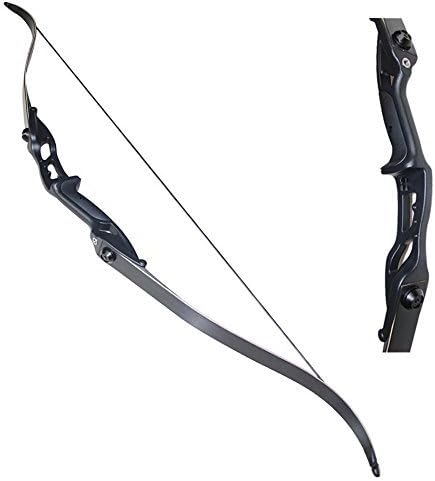
The TOPARCHERY 56″ Takedown Hunting Recurve Bow excels in all areas: speed, durability, portability, and adaptability. With a 17″ riser and 53″ limbs, the overall bow length is 56″ and it is rated to a maximum draw length of 30″. This adaptable setup is perfect for target work, training, and legal hunting in areas where it is allowed.
Unlike handles made entirely of wood, which might experience warping or laminating problems over time, this riser’s forging from high-quality aluminum alloy ensures stability for years to come. Both the handle and the field version are sturdy and comfortable to use. A fiberglass covering over a maple wood core makes for a steady draw cycle and dependable energy return in the limbs, making it easy to hit consistent, fluid shots even as your form improves.
When you hit the range, you’ll see assured performance, including rapid arrow speeds, pinpoint grouping, and a consistent draw from session to session. Arrows made of aluminum or carbon will complement the bow’s power and make adjusting the draw easier.
The fact that it disassembles makes it easy to transport and store; just pull the legs off to fit in a suitcase or bag, and then put it back together again in no time at all when you get to your location. The matte black surface is great for the gym or the field because it reduces reflections.
With its sturdy metal riser, solid maple/fiberglass limbs, and upgrade-friendly adaptability, this TOPARCHERY model offers dependable accuracy and a comfortable shooting experience for adults and teens. It is a right-sized recurve, 56″ in length, that combines all of these features.
Things to Consider Before Buying a Recurve Bow:
Most of what you need to evaluate before buying a recurve bow involves draw length, draw weight, bow length, limb and riser materials, and your shooting goals; you should assess fit, hand dominance, intended use (target, hunting, or recreation), arrow spine, string choice, and maintenance requirements to ensure consistent accuracy and long-term satisfaction within your budget.
Traditional Recurve Bows
You’ll find traditional recurves built as one-piece or simple laminated takedowns using maple, bamboo, or horn; lengths typically run 58-66 inches and draw weights common between 20-45 lb. You’ll favor them for instinctive shooting and hunting because they deliver smooth, quiet shots without modern hardware. You can expect lower initial cost-models like the Samick Sage or Bear Archery entry bows often range -yet they offer limited micro-tuning compared with modern systems.
Modern Recurve Bows
You’ll encounter modern recurves as takedowns with aluminum or carbon risers and fiberglass/carbon limbs, limb lengths usually 24-30 in; these let you swap limbs to change draw weight and tune brace height, tiller, and tiller bolts. You’ll see Olympic-level setups from Win&Win or Hoyt costing with accessories-sights, stabilizers, and clickers-designed for consistent 70 m target performance.
You should match arrow spine to your draw weight and length-typical spines for 28-44 lb setups fall in the 400-700 range-and use plunger pressure, nocking point, and limb alignment to remove paradox and center-shot issues. You can add a clicker for a repeatable release, tune with limb pockets or shims for tiller balance, and optimize stabilizer mass (often 12-18 oz distributed front/back) to reduce oscillation for tighter groupings.
Draw Weight
You should match draw weight to your strength and goals: beginners often start at 20-30 lb for form practice, adult target archers commonly use 28-32 lb for endurance, and hunting typically requires 40-50+ lb to ensure ethical penetration; test a bow on a scale and confirm you can hold at full draw for several seconds without strain, then increase weight gradually by 2-5 lb as your technique and strength improve.
Length and Size
Bow lengths typically run 48-70 inches; longer bows (62-70 in) deliver a smoother draw and better stability for target shooting, while shorter bows (48-60 in) are easier to maneuver in a blind or tree stand; youth bows often sit in the 48-54 in range, so choose length that complements your measured draw length and shooting environment.
Also consider brace height and arrow spine when selecting length: a longer bow with a 28-30 in draw often pairs well with 62-66 in limbs for forgiving arrow flight, whereas a 24-26 in draw usually works better with 56-60 in bows; try different lengths to assess aiming comfort, torque tendencies, and how easily you can clear your arrows at full draw.
Advantages of Recurve Bows
You get a lightweight, low-maintenance platform that teaches solid form: many beginner recurves weigh 2-3.5 lb and draw 20-35 lb for target use, while hunting setups move into 40-50+ lb. Olympic-style recurves let you compete at 70 m using standardized 68-70″ setups, and takedown designs pack into backpacks, making them popular for field archery and backcountry hunters who value simplicity and reliability.
Disadvantages of Recurve Bows
You must deal with a demanding hold and flatter performance ceiling: recurves have necessaryly 0% let-off so a 40-50 lb draw requires full-strength holding, and peak arrow speeds usually lag compound bows, affecting long-range power and forgiveness for marginal shots.
In practical terms that means you’ll need more deliberate practice-many archers log 100+ hours to consistently shoot tight groups at 20-30 yards-and you’ll replace strings and serve periodically with heavy use. For hunting, plan on ethical effective ranges commonly within 20-40 yards unless you invest significant time in tuning, heavier limbs, and advanced shooting technique.
Assessing Your Skill Level
If you’re just starting, choose a low draw weight (15-25 lb) so you can maintain form through 20-30 minute sessions; intermediate archers usually handle 25-35 lb and should see tighter groups at 18-25 m. Gauge skill by consistency: if you can shoot 3 ends of six arrows with similar anchor and grouping, you’re ready to increase weight or switch to performance limbs. Track arrow group size and shot-to-shot variance to decide progression.
Testing for Comfort and Fit
When trying bows, shoot at least 10-15 arrows with your usual setup and note grip pressure, finger pinch, and brace height feel; a neutral hand should produce minimal torque and steady follow-through. Check that your draw length (use wingspan ÷ 2.5) matches the bow’s geometry, and confirm the riser feels natural in your hand while aiming and at full draw.
For deeper testing, vary one variable at a time: change grip shape, swap limb stiffness, or alter arrow spine to isolate issues. Measure groups at a fixed distance (for example 18 m) and log average group diameter-if groups tighten after adjusting grip or lowering draw weight, the fit was off. Also watch for physical signs like elbow or shoulder strain after 30-50 shots; persistent discomfort indicates a poor match rather than a technique problem.
Seeking Expert Advice
Use a certified coach or reputable pro shop to measure draw length, read draw weight with a bow scale, and select arrow spine; expect a one-hour fitting fee of . Ask to shoot demo bows across the weight range, have them check brace height and nock alignment, and request 10-20 test shots to judge feel and tuning before you buy.
Bring your shooting clothes and any gear you’ll use, and ask whether they follow World Archery/USA Archery methods, use a spine chart, and offer loaner bows. Verify if they provide follow-up tuning (tiller, plunger, brace height) and inspection within 30 days, confirm turnaround times for custom cuts, and request documentation of measured draw length and recommended spine numbers so you can order matching arrows.
String and Limb Care
You should wax the string every 4-6 shooting sessions or about 200 arrows to prevent fraying, and inspect serving and nocking points each time. Replace the string every 1-2 years or ~5,000 shots depending on use. Check limbs monthly for hairline cracks, delamination or soft spots, and photograph changes for comparison. Unstring takedown bows for long-term storage and follow manufacturer torque specs when fitting limbs-use a bow press only as directed.
To wrap up
On the whole you should match draw length and weight to your strength and shooting style, choose the right riser and limbs for your purpose (target or hunting), inspect materials and finish, factor in budget and necessary accessories, test the bow in hand for comfort, and plan for tuning and maintenance so you buy a setup that serves your progress.
Leave a Reply