
Finding the best walkie talkies shouldn’t be a struggle. Whether you are hiking off-grid or managing a team, you deserve a reliable lifeline. We analyzed top two-way radios to ensure you stay connected with long-range clarity. Stop worrying about dangerous dead zones and experience the freedom of crystal-clear audio when it matters most. Ready to upgrade your gear? Let’s look at the top choices.
Contents
- Top 5 Winter Gloves:
- 1. MOREOK Waterproof & Windproof Winter Gloves
- 2. ihuan Winter Waterproof Ski Gloves
- 3. SIMARI Winter Gloves
- 4. Schwer Waterproof Winter Work Gloves
- 5. TRENDOUX Winter Gloves
- Things to Consider Before Buying a Winter Glove:
- Insulated Gloves
- Waterproof Gloves
- Touchscreen Compatible Gloves
- Material
- Fit and Comfort
- Activity Level
- Advantages
- Disadvantages
- Read Reviews
- Check Warranty and Returns
- Storage Advice
- Conclusion
Top 5 Winter Gloves:
1. MOREOK Waterproof & Windproof Winter Gloves

Moreok Waterproof & Windproof Gloves are perfect for your cold-weather activities; they keep your hands warm, dry, and easy to use while you’re on the move. The inside has 200 g of 3MTM ThinsulateTM insulation, which effectively traps heat even when wet, and a plush velvet lining that helps wick away moisture. You can cycle, hike, or commute in complete dryness thanks to the TPU waterproof membrane and laminated windproof shell that form a double barrier against snow and slush.
The ease and control will be appreciated by you. You can check directions or answer calls without removing your gloves thanks to touchscreen-compatible fingertips. An anti-slip, wear-resistant nitrile covering gives the ergonomically designed palm a firm grasp on tools, trekking poles, or handlebars. You can wipe off ski goggles or fogged glasses with the terry-cloth panel on the thumb.
Dialed in are fit and protection. With an elastic cuff and an adjustable wrist buckle, you can keep out draughts and snow. Reusable and long-lasting design is perfect for cold-weather activities including riding, skiing, snowboarding, camping, hiking, and mountaineering.
The XS size provides a snugger, more responsive fit for those with smaller hands, and care is easy. Long, frigid days are much more bearable with these MOREOK winter gloves, which are warm, waterproof, screen-friendly, grip-confident, and wind-and snow-resistant.
2. ihuan Winter Waterproof Ski Gloves
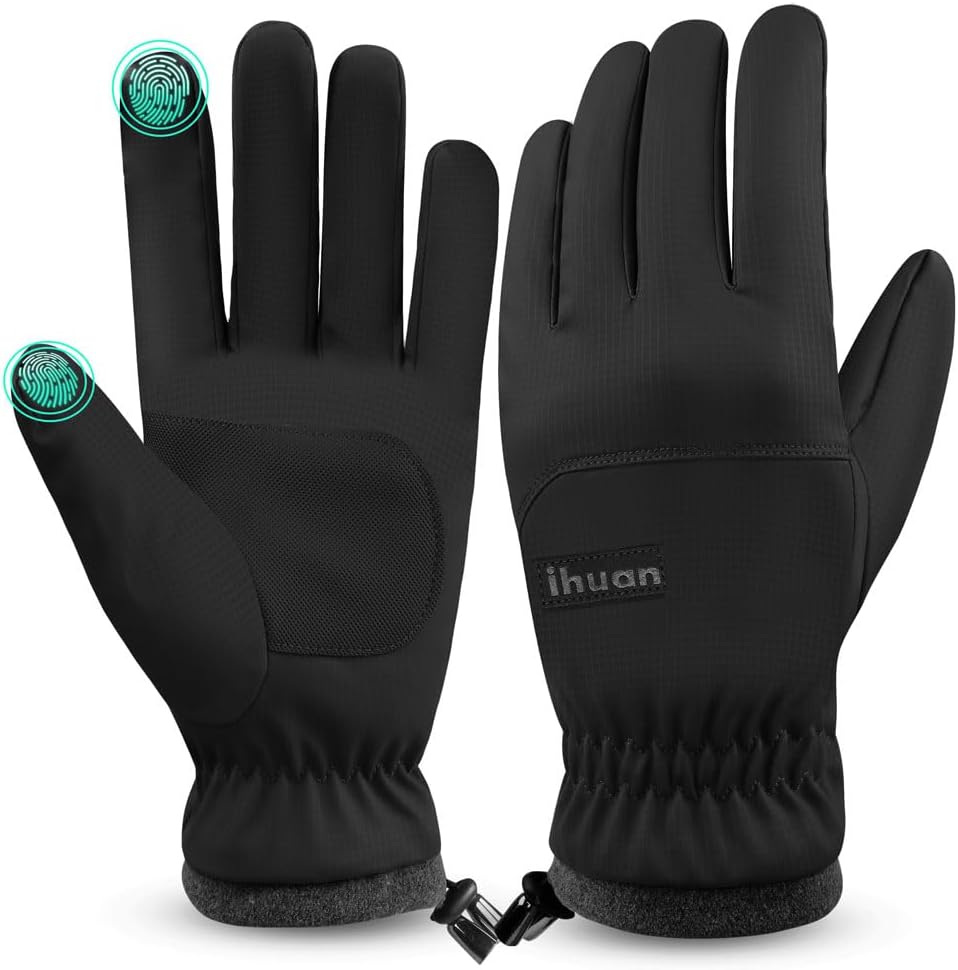
The ihuan Winter Waterproof Ski Gloves are ideal for everyday cold weather since they keep your hands warm without adding bulk, and you can still use your phone while wearing them. A windproof and water-resistant outer layer keeps light snow and wind at bay, while a warm, cozy fleece interior keeps you toasty. With an adjustable windproof cuff, you can keep your hands warm in the 20-32 °F winter temperatures by keeping out drafts and spindrift.
Dexterity and warmth are well-balanced, and you will love it. Driving, shoveling, walking the dog, or going for a short run or hike is no problem with these gloves thanks to their lightweight construction. Abrasion resistance and an anti-slip microfiber leather palm make these gloves ideal for everyday use, and they also make it easier to hold onto slippery surfaces like phones, poles, and tools.
Conductive touchscreen screens offer a more sensitive reaction on smartphones and tablets, allowing you to stay connected without exposing your fingers. This means you may shoot photos, answer to messages, and make calls while on the road.Take care not to soak the cuffs for optimal performance; while the outer shell is water-resistant for snow and light rain, they are not waterproof. Pick a size that fits snugly without restricting your range of motion.
Winter errands, commutes, and outdoor activities are made easier and more comfortable with these ihuan gloves, which block the wind, have a dependable grip, and have really responsive touchscreen control.
3. SIMARI Winter Gloves

The SIMARI Winter Gloves are an excellent all-around choice if you’re looking for gloves to wear on a daily basis that will keep your hands warm without limiting your movement. Get the most out of your touchscreen-enabled devices—smartwatches, phones, tablets, and even your car’s GPS—without exposing your chilly hands.
Immediately, you will feel at ease. On cold mornings and late-night commutes, the 95% polyester/5% spandex shell provides elasticity for a snug, flexible fit, while the soft flannel inner and elastic cuff keep in warmth. With the silicone grip patterns covering the palm and fingers, you can confidently hold stroller handles, trekking poles, gym gear, and steering wheels. The grip also increases traction and resistance to abrasion.
Constructed with safety and simplicity in mind. Drivers will be able to see you better in low light or at night when you have reflective accents on the back of your hand. To maintain their performance, simply machine wash according to the instructions and let them air dry.These unisex gloves are perfect for a wide range of activities—from jogging and cycling to driving and hiking—as well as for wintertime outdoor chores like shovelling snow or mowing the lawn. Plus, they’re lightweight enough to use on chilly spring and fall days. Also, if you know someone who would appreciate a pair of warm, gripping gloves that are compatible with their phone, these would be a great present.
In a modern, stretchy design, the SIMARI Winter Gloves provide all-day comfort and control with touchscreen functionality, secure grip, and warmth.
4. Schwer Waterproof Winter Work Gloves

Designed for long, frigid shifts, the Schwer Waterproof Winter Work Gloves stay dry, grip hard, and won’t hurt your skin. So you can keep your hands free to concentrate on the task at hand, these are crafted without PFAS to lessen the likelihood of skin irritation or allergic responses caused by prolonged use.
Real weather defense is yours. Protect your hands from wind, slush, and light rain with these premium gloves made of polyester and waterproofed twice with latex. Inside, a thin layer of acrylic terry retains heat efficiently, allowing you to comfortably handle small parts and controls in temperatures as low as -22°F without sacrificing warmth.
The gloves’ greatest strength is their grip. When pushing shovels, lifting buckets, or operating heavy machinery, the foam-latex palms provide a firm grip in all weather, minimizing tool slippage and hand fatigue. So that the gloves don’t get rigid from being in the cold, the latex coating remains flexible even as the temperature drops.Ease of use and security are built in. The snug knit cuff prevents draughts, the high-viz orange hue increases visibility around trucks and heavy gear, and the robust latex resists tearing.
Snow removal, salting, wet sawing, grouting, driving, winter gardening, sleet loading, farm duties at the trough, and even impromptu snowball fights are all possible with these versatile tools. Schwer provides a durable, PFAS-free option for winter’s worst: warm, waterproof, windproof gloves with a grip that will inspire confidence and provide all-day comfort.
5. TRENDOUX Winter Gloves

The TRENDOUX Winter Gloves are the clear winner if you’re looking for knit gloves that keep your hands toasty while still allowing you to utilize your screens. Without removing your glove in the cold, you can now touch and swipe more smoothly on your phone, tablet, or automobile screen thanks to upgraded touchscreen panels on the thumb, forefinger, and middle finger. These panels have 50% more conductive yarn.
You will also experience a firm hold. With the palm wrapped in a triangular pattern of silicone, you may confidently grasp a phone, coffee cup, hiking pole, or steering wheel—even in wet or slippery conditions. Texting, typing, and using your natural dexterity are all made easier by the interior soft napped lining, which is both snug and bulk-free, trapping heat.
Keeps you warm and dry with a snug fit. A thicker elastic cuff keeps out wind and wayward snow, while a stretchy knit hugs your hand. These are perfect for chilly weather fast outdoor workouts, commuting, driving, or running errands thanks to their snug fit.The flexibility and touchscreen fibers may be preserved with simple care: hand wash only and let air dry. For optimal touchscreen performance, choose a size that fits snugly; better contact equals better performance.
Whether you’re a winter sports fan or just want a pair of gloves to keep your hands warm, TRENDOUX has you covered with its low-bulk design, dependable grip, and responsive touch control.
Things to Consider Before Buying a Winter Glove:
Over the winter season you need gloves that balance warmth, dexterity, and durability; evaluate insulation type, shell material, waterproofing, fit, cuff length, breathability, and touchscreen compatibility so your gloves suit your activities and climate, and verify care instructions and reinforcement in high-wear areas for longer service life.
Insulated Gloves
You’ll pick insulation based on activity: down (500-800 fill) gives superior warmth-to-weight but loses loft when wet, while synthetics like PrimaLoft or 3M Thinsulate keep insulating power damp; select 100-200 g synthetic for commuters, 300-400 g for extended outdoor shifts, and combine with a snug wrist seal to prevent heat loss without sacrificing finger movement.
Waterproof Gloves
You should prioritize membranes (GORE‑TEX, eVENT, or proprietary laminates) and fully taped seams for true waterproofing; gauntlet cuffs and DWR-treated shells help keep water out during skiing or snow removal, while breathable liners reduce sweat buildup on high‑output outings.
Maintenance and design details matter: you’ll need to reapply DWR after machine washing and avoid fabric softeners that clog membranes, check for long gauntlets that overlap jacket sleeves for deep‑snow use, and choose rubberized or reinforced palms for wet, abrasive tasks versus lightweight laminated shells for alpine touring where mobility matters.
Touchscreen Compatible Gloves
You’ll find two main approaches: conductive yarn woven into thumb/index tips or conductive leather/patches; if you need precision, select gloves labeled multi‑touch or those with full‑finger conductive fabric, and consider thin liners (0.5-1.5 mm) under insulated gloves to retain both warmth and screen control.
Performance varies by material and construction: you should test taps, swipes, and pinch‑to‑zoom on your device-some gloves only register a single point while others support gestures; expect conductivity to degrade after many washes unless the manufacturer specifies washable conductive fibers or replaceable pads.
Material
If you choose leather, expect abrasion resistance and natural wind protection; treat it with wax or conditioner for longevity. Synthetic shells like nylon with Gore‑Tex or similar membranes provide 10,000-20,000 mm waterproofing and high breathability, while down offers 600-800 fill warmth but loses loft when wet; 100-200 g Thinsulate or 60-120 g PrimaLoft give predictable synthetic warmth and dry faster after exposure.
Fit and Comfort
Measure your palm circumference (inches or cm) and compare to brand charts-typical sizes span 7-11 inches; allow about 0.5-1 cm space at the fingertips for insulation loft. You should notice articulated fingers and minimal seam bunching, a secure wrist strap, and gauntlet length (3-6 inches) appropriate for jacket overlap to prevent snow entry while preserving mobility.
After trying gloves on, assess how liners change feel: a snug liner can improve dexterity and wick moisture, while bulky insulation may reduce finger sensitivity by up to 30%. You should test pinch grip on zippers and pole handles, check for palm materials like Clarino or silicone for traction, and evaluate break‑in behavior-leather often softens after a few outings.
Activity Level
Match insulation and membrane performance to exertion: high‑output activities (cross‑country, snowshoeing) favor lighter insulation (20-80 g) and breathability >10,000 g/m²/24h, while low‑movement situations (spectating, ice fishing) need 200-400 g or mittens with higher fill. Ski touring and alpine use benefit from waterproof ratings of 10k-20k mm to handle wet snow and varying conditions.
Layering is vital: pair a thin liner glove (merino or synthetic) with a shell for versatility-this reduces sweat buildup and lets you adapt to temps from +5°C to −20°C by swapping insulation. For example, a 100 g synthetic liner plus a 15k mm shell suits winter commuting, whereas alpine climbers often choose 200-300 g insulated gloves with a Gore‑Tex Pro shell for prolonged exposure.
Advantages
You can match gloves to activity: synthetic-insulated models keep warmth when wet for winter commuting, while down-packed gloves deliver superior warmth for static cold like watching outdoor events. Manufacturers combine membranes and breathable liners so you often get waterproof protection plus moisture control during moderate exertion. A layered approach-thin liner plus insulated shell-lets you adapt rapidly between -5°C and -25°C conditions without buying multiple pairs.
Disadvantages
You’ll face trade-offs: waterproof membranes and heavy insulation reduce dexterity needed for zippers, camera controls, or climbing. Touchscreen patches simplify phone use but wear out and can open cold paths at fingertip seams. Also, high-end materials raise costs and demand specific care routines; a single-season of heavy use can compress insulation and shorten effective lifespan.
In practice, common failure points include fingertip wear from constant handling, seam leaks around wrist closures, and membrane delamination after repeated wet-freeze cycles. Expect well-used gloves in active roles (ski touring, guiding) to last roughly 1-3 seasons; casual daily gloves often endure longer but lose loft and water repellency with time, so you should plan replacement based on performance rather than age alone.
Read Reviews
Scan at least 50-100 reviews and weight verified purchases; watch for repeat issues like seam failure, insulation compression after washing, or touchscreen wear. Pay attention to reviewers who list conditions (temps, activity, glove age) so you can match experiences to your needs and spot patterns across seasons and product batches.
Dig into video reviews and long-term follow-ups where possible: a two-season user describing abrasion on the thumb or compressed 100 g insulation after 12 months carries more weight than a single unboxed photo. Sort reviews by lowest rating, check seller Q&A for fit notes, and note whether reported problems occur within the return window or after manufacturer repair periods.
Check Warranty and Returns
Confirm the return window (commonly 14-30 days) and warranty period-many makers offer 1-5 year limited warranties and some high-end brands provide repair programs or workmanship guarantees. Keep receipts and register products when offered; clear policies let you test fit at home and return or exchange if performance falls short.
Before buying, verify who pays return shipping, restocking fees, and estimated refund time (often 7-14 days after receipt). You should also confirm repair turnaround times and service costs: brands that offer in-house repairs or parts can extend a glove’s life and are worth the premium if you plan heavy use.
Storage Advice
You should store clean, fully dry gloves in a breathable cotton bag or on a shelf at stable room temperature (10-15°C) with humidity under 50% RH; use silica gel packs to control moisture and avoid attics, garages, or vacuum-seal bags that compress insulation and can trap humidity, and hang or lay leather flat to prevent creases.
For long gaps between seasons, check gloves every 3 months, replace silica packs annually, and use cedar blocks or lavender sachets to deter moths; if you treat shells with a spray-on DWR, wait 24 hours before storing, and for delicate gloves keep them in a dedicated compartment to avoid abrasion from buckles or zippers-proper storage can add 1-3 seasons to quality gloves.
Conclusion
On the whole you should prioritize fit, insulation, waterproofing, dexterity, and breathability when choosing winter gloves; match materials and features to your activities, assess layering options and touchscreen compatibility, and balance warmth with mobility and maintenance needs so your gloves perform reliably throughout the season.
Leave a Reply