
Best Binocular Harnesses can stop neck pain and bouncing optics for birders and hikers who crave comfort and quick access. I’m an optics expert and tested top binocular straps for comfort, stability, and durability to save you time and frustration. You’ll feel immediate relief and freedom with these game-changing picks. Ready to find the perfect birding harness that fits your gear and style? Let’s dive into the best options.
Contents
- Top 7 Binocular Harnesses:
- 7: Binocular Harness Strap, X-shaped Adjustable Deluxe Bino Chest Straps
- 6: Vortex GlassPak Binocular Harness
- 5: Lightweight Hunting Chest Rig Binocular Harness with Rangefinder Pouch
- 4: Lone Trail Binocular Harness Chest Pack
- 3: MOXULE Binocular Harness Chest Pack
- 2: Eberlestock Recon Modular Bino Pack
- 1: Marsupial Enclosed Binocular Chest Pack
- Things to Consider Before Buying a Binocular Harnesses:
- Full-Shield Protective Chest Packs
- Weight Distribution and Ergonomics
- Material Durability and Weather Resistance
- Benefits of Hands-Free Stability
- Potential Drawbacks in Dense Cover
- Adjusting Straps for a Secure Fit
- Attaching the Binocular Tether Hardware
- Regular Inspection of Stress Points
- Final Words
Top 7 Binocular Harnesses:
7: Binocular Harness Strap, X-shaped Adjustable Deluxe Bino Chest Straps

For those on a tight budget who insist on using a neck strap, we recommend the X-shaped Deluxe Chest Strap.Every time it swings, your glass will land precisely where you want it to: in your rifle, the thicket, or your chest.To begin, the X-shaped four-point webbing distributes your body weight so that your shoulders and hips take the strain off your neck.After that, you may put it on over a t-shirt or a bulky November layer by adjusting the length of each strap.
As a last point, the clips aren’t just for binoculars. The same harness holds both the rangefinder and the camera.The downside of an open system is that your glass will get dust, rain, and brush on it. You won’t find a rangefinder pouch or pockets. Adjust the tension as the layers shift.Good for: casual glassers, those on a tight budget, and those who wait in treestands. Not recommended for: hunters in remote areas that want waterproof gear.
6: Vortex GlassPak Binocular Harness

First and foremost, we have the Vortex GlassPak, the greatest affordable pack on our site.Straps alleviate sore necks but do nothing to protect your lenses from the elements. With the GlassPak, the case is closed.To start, there are 12×50 glass pieces inside the 8-ounce, 6.75×6.25×3.75″ pack.Secondly, the binoculars’ integrated drop tethers prevent an open lid from becoming a fractured objective.
The bag’s mesh side pockets and zippered back pocket provide plenty space for your phone, lens pen, and any necessary accessories.Downside: Comparatively slower and noisier access compared to the packs up top due to buckle closure rather than magnet. No pouch for rangefinders. It won’t rain.Whitetail hunters, hikers, birdwatchers, and first-time pack buyers will love this pack. Apt for: hunters that like to remain undetected.
5: Lightweight Hunting Chest Rig Binocular Harness with Rangefinder Pouch

If you’re a bowhunter who needs complete silence, you need the Lightweight Hunting Chest Rig.When you’re at full draw, all it takes is a brush with a strong pack front.To start, it has a silent face cloth and a non-rip polyester shell, so even when drawn fully, nothing will scratch or crease.The following is the main container, which measures 7 by 6.5 by 3 inches and contains detachable bino tethers. It can swallow 12×50 glass.
Last but not least: a cushioned mesh harness with air vents, a rangefinder pouch, and MOLLE webbing.The lack of a rain cover and the fact that the polyester shell only repels light precipitation are two drawbacks. Small rangefinders are compatible with the pouch.Ideal for: bowhunters, hunters in the early season, and those who like a lightweight setup. Apt for: glassing in a continuous rainstorm, not hunters.
4: Lone Trail Binocular Harness Chest Pack

Choose the Lone Trail Chest Pack if you’re a hunter who goes glassing in inclement weather.When it comes to optics, rain, wet snow, and dew-soaked brush are far worse than drops. In contrast, Lone Trail expands upon that.To begin, a brush-built binocular compartment measuring 6 by 7.1 inches is encased in a 500D Cordura exterior that is resistant to rain.Afterward, a silent magnetic closure will take the place of zippers, allowing for the insertion and removal of glass while an animal eats.
At last: a distinct rangefinder pouch measuring 4.1 by 3.1 inches and PALS webbing for continuous ranging on your chest.The Cordura isn’t waterproof, but it does repel water, so even a heavy rain won’t be a problem. The package does not include a rain cover. Less slender than the packs that follow.This is the ideal hunting gear for hunters who frequently traverse wetland areas, as well as those who hunt elk and deer. Avoid if you are an ultralight hiker or a minimalist.
3: MOXULE Binocular Harness Chest Pack

Hunters who prefer to carry their entire gear in one front pocket will love the MOXULE Chest Pack.The moment you remove a rangefinder, lens cloth, or phone from your pack, you halt your search.To start, the main compartment and two internal mesh pouches are housed in an 8.46 by 10.61-inch body.The next thing is that there are six storage zones: a removable rangefinder pouch, a phone pocket, a side pocket, and a mesh panel on the back.
Lastly, the rain cover that comes with the pack has its own compartment and can be pulled over it.Downside: at full draw, it can crowd a bow because it is the largest pack of its kind. The total weight due to loaded conditions quickly builds up. Wearing these broad straps will keep you toasty.Ideal for: rangefinder-wielding hunters, all-day glassers, and elk hunters. Bowhunters who require a lean chest should not wear this.
2: Eberlestock Recon Modular Bino Pack

For hunters who prefer a system than a single pack, the Eberlestock Recon Modular is the way to go.In most cases, the creator of the harness will decide what you should wear. Every season calls for a different set of gear. Along with it, the Recon evolves.Start with the bino pouch; attach additional pouches using bolts as your loadout expands. This creates a modular chest-rig platform.After that, with the eyes remaining pointed downward, the glass is silently raised by magnetic forward-pull access.
Lastly, a 3D mesh harness allows air to circulate and reduces body heat, while low-profile MOLLE wings lay flat when worn under a backpack.Downside: you’ll need to purchase additional pouches in order to customize the base pack since it comes unassembled. The use of modular hardware increases the overall system’s footprint. It won’t rain.Hunting with a variety of species, tinkering with gear, and backpacking are the best types of hunters. Not for: hunters looking for a complete package.
1: Marsupial Enclosed Binocular Chest Pack
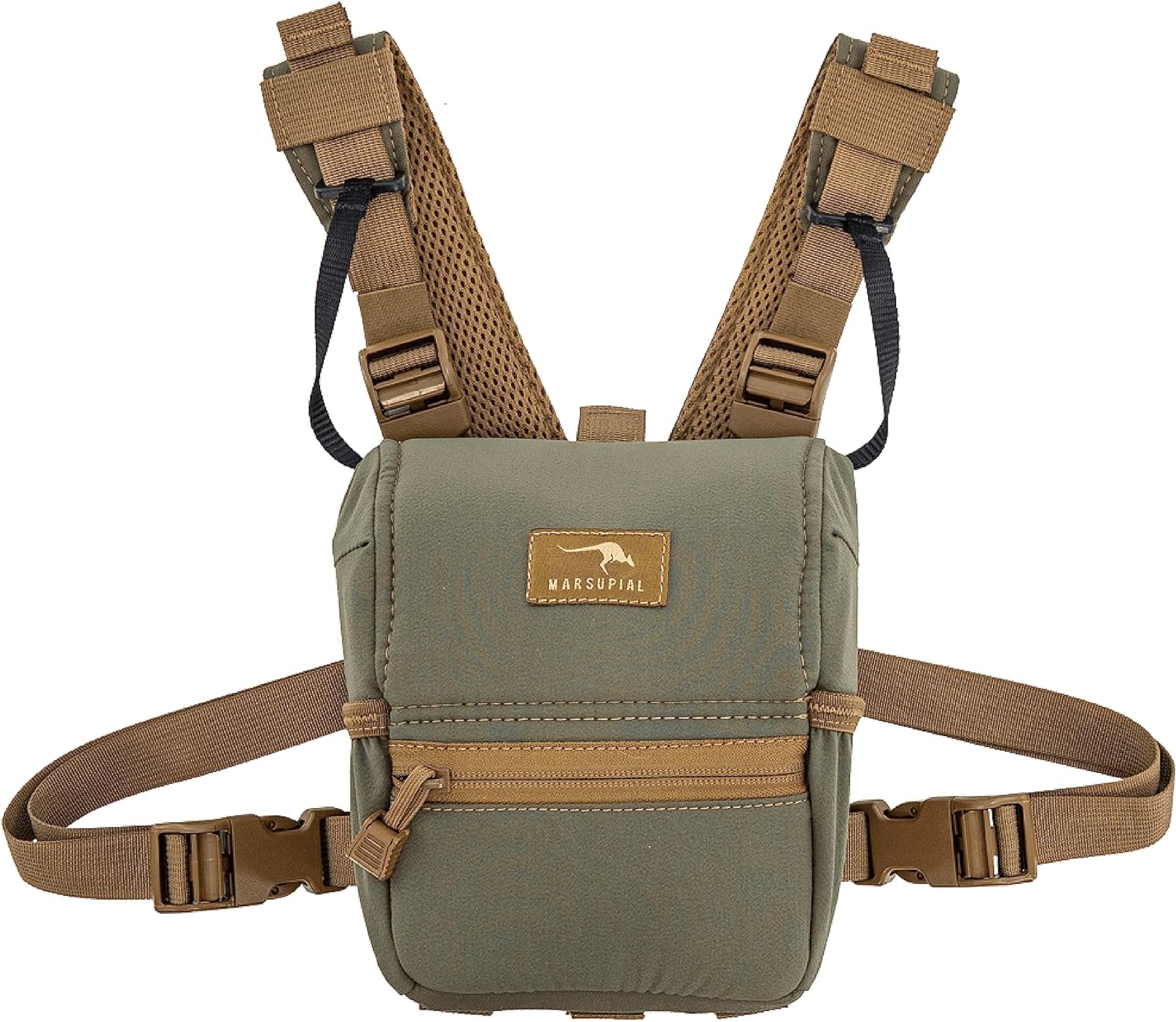
The Marsupial Enclosed Chest Pack, designed for hunters who glass from dark to light, is the best binocular harness in 2026.By the sixth hour, the minor inconveniences—a fluttering cover, grit on your lenses, and a lid you hold open—decide everything.To begin, two sets of magnets at the base hold the lid open while you fill it with glass; after the glass is in, the magnets at the top will seal the lid. Just just one thing accomplishes that.Two, you may avoid getting needles, dust, and precipitation by enclosing your body with tall sidewalls and overlapping wings.
Thirdly, the scrape of an object against fabric is silenced by an interior coated with fleece.In the fourth place, you can attach a rangefinder pouch, a bear spray holster, or an accessories case using the MOLLE webbing and the stretch pockets.Negative: the package does not include a rain cover. Large objectives necessitate the large, while the small one is more suited to medium-sized lenses. An open-top pack is more compact than a fully enclosed one.Ideal for: serious optics users, all-day glassers, and big-game hunters in the west. Bowhunters who trim bulk should not use this.
Things to Consider Before Buying a Binocular Harnesses:
These designs use elastic straps crossed on your back, allowing for flexibility and comfort during long viewing sessions. The lightweight nature of the straps ensures optimum wearability, while their X configuration distributes weight evenly. Such features make this option popular among birdwatchers and hikers alike.
Full-Shield Protective Chest Packs
Offering an additional layer of safety, these packs not only secure binoculars but also usually include storage for accessories. Their design shields binoculars from environmental elements, ensuring better longevity. Such systems often come in handy for outdoor enthusiasts who face variable weather conditions.
Full-shield protective chest packs also provide convenience by incorporating pockets for items like maps, snacks, or tools. This multifunctionality means you can keep your imperative outdoor gear close at hand, minimizing the need for extra bags. With the added protection against drops and bumps, these harnesses are often favored by professionals in wildlife photography.
Weight Distribution and Ergonomics
Evaluate how the harness distributes weight across your body to enhance comfort during long periods of use. Properly designed harnesses minimize strain on the neck and shoulders, allowing for longer viewing sessions without discomfort.
Material Durability and Weather Resistance
Analyze the materials used in the harness construction. High-quality fabrics will ensure longevity and protection against harsh conditions, which is important for outdoor enthusiasts.
A durable harness typically utilizes nylon or polyester blends that can withstand significant wear and tear. Weather-resistant treatments further add to its functionality, enabling use in rain or humidity without compromising performance. Selecting a harness with reinforced seams and quality buckles contributes to an overall sturdy design. Reliability is key, especially for those engaging in extended outdoor activities such as birdwatching or hiking.
Benefits of Hands-Free Stability
Providing hands-free stability significantly improves your viewing experience. When using a harness, binoculars remain securely positioned, allowing for steady observation without the strain of holding them up. This convenience becomes particularly beneficial during lengthy outings, where maintaining focus on distant wildlife is imperative.
Potential Drawbacks in Dense Cover
Regarding dense cover, a binocular harness can sometimes impede movement. Thick brush may snag on the harness, making maneuverability more challenging. The added bulk can also hinder quick movements necessary for spotting elusive wildlife.
Dense environments often require agility, as navigating through such areas may involve frequent changes in direction. A harness can become a nuisance, pulling at clothing or getting caught on branches. Ensuring a snug fit might mitigate some discomfort, yet it’s wise to consider how often you’ll be in thick underbrush during your outings. Opting for a lightweight model may balance stability with the need for maneuverability when traversing these challenging terrains.
Adjusting Straps for a Secure Fit
Begin by loosening all straps before slipping the harness over your shoulders. Securely adjust the shoulder straps so they sit comfortably but snugly against your body. Final adjustments will ensure the binoculars stay stable while in use, providing easy access without bounce during activities.
Attaching the Binocular Tether Hardware
Locate the tether hardware components that come with your harness. Attach the clips or loops to the designated areas on your binoculars, ensuring that they are firmly engaged. Proper attachment minimizes the risk of your binoculars accidentally disconnecting, ensuring consistent reliability on your adventures.
Focus on the placement of the tether points as you attach them, ensuring that they align with your binocular’s design. This alignment not only improves accessibility but also balances the weight distribution, preventing strain on your neck and shoulders during extended use. Evaluate how the tether interacts with the straps to enhance functionality while keeping the binoculars secure.
Regular Inspection of Stress Points
Consistent inspection of stress points minimizes the risk of failure during use. Regularly check stitching, attachment points, and adjusters for signs of wear or looseness.
Each time you handle the harness, look closely at the stitching-any fraying can be an indicator of potential failure. Pay special attention to where straps meet the body and any movable parts, as these areas bear the most stress. Identifying degradation early can save you from unexpected failures while in the field, ensuring your binoculars remain secure. Conduct these inspections before heading out, particularly after rough use.
Final Words
Prior to purchasing a binocular harness, assess factors such as comfort, adjustability, and material quality. Evaluating these elements ensures a suitable choice that enhances your outdoor experiences, whether birdwatching, hiking, or attending sports events. Make an informed decision to enjoy the benefits of hands-free viewing effectively.
Leave a Reply