
BEST CLIMBING STICKS can turn a shaky treestand into a safe, quiet platform when you need it most. If you worry about unstable steps or heavy gear, we tested top tree steps and hunting ladder options to find the most stable, lightweight climbing gear. Feel fearless. Our hands-on reviews deliver confident, reliable picks that save time and boost safety. Read on for our top-rated picks and buying tips.
Contents
- Top 7 CLIMBING STICKS:
- 7: Guide Gear Quick Tree Climbing Sticks, 3 Pack
- 6: BIG GAME 20′ Quick-Stick Climbing Ladder Sticks
- 5: Guide Gear Climbing Stick Ladder for Tree Stands, 25′
- 4: Tomaki Aluminum Non-Slip Climbing Sticks, 4 Pack
- 3: Muddy Pro Climbing Sticks with Rope Cam Attachment
- 2: XOP X2 Double Step Climbing Sticks, 3 Pack
- 1: Hawk Helium 20″ Aluminum Climbing Sticks, 4-Pack
- Things to Consider Before Buying a CLIMBING STICK:
- Single-stick and multi-stick systems
- Height, weight capacity, and packed size
- Material, durability, and tree compatibility
- Attachment system and safety standards
- Define your climbing needs and budget
- Check specifications and verify compatibility
- Compare options and inspect safety features
- Key advantages
- Common limitations
- Inspect Before Each Use
- Secure and Test Each Section
- Follow the Manufacturer’s Instructions
- Final Words
Top 7 CLIMBING STICKS:
7: Guide Gear Quick Tree Climbing Sticks, 3 Pack

The greatest entry-level, low-cost set—the three-pack of Guide Gear Quick Climbing Sticks.Without access, a hang-on stand serves little use, and screw-in steps harm the tree. In both cases, these sticks work.Step one: three separate strap-on portions that, when added together, reach a height of eight feet. Arrange them according to the tree’s needs.Next, a two-step design that prevents slipping—a foothold on each level—is implemented.
Lastly, weld tubular steel with a 300-pound load rating.Downside: the 17.1-pound outfit is too heavy to wear for extended periods of time. A second set is required for a higher stand because three sections reach approximately 8 feet.Ideal for: shorter hikes on private property and first-season hunting. Avoid: deep public-land walks and saddle hunters.
6: BIG GAME 20′ Quick-Stick Climbing Ladder Sticks

The greatest option for a stand that remains upright throughout the season is the Big Game 20-foot Quick-Stick.Unmoving stands abound.Climbing the same tree from late summer till the season ends is how you hang them.To start, there is a single 20-foot ladder. There is perfect alignment between each stage.The journey is then divided into five sections.Last but not least: long-lasting, sturdy steel with cam buckle straps provided.
The 20-pound weight makes this technique unsuitable for use on every hunt. A tree with a fairly straight trunk and a diameter of at least 9 inches is required.It is ideal for hunters who have prepared stands on private territory. Not recommended for: hunters who are constantly on the go.
5: Guide Gear Climbing Stick Ladder for Tree Stands, 25′
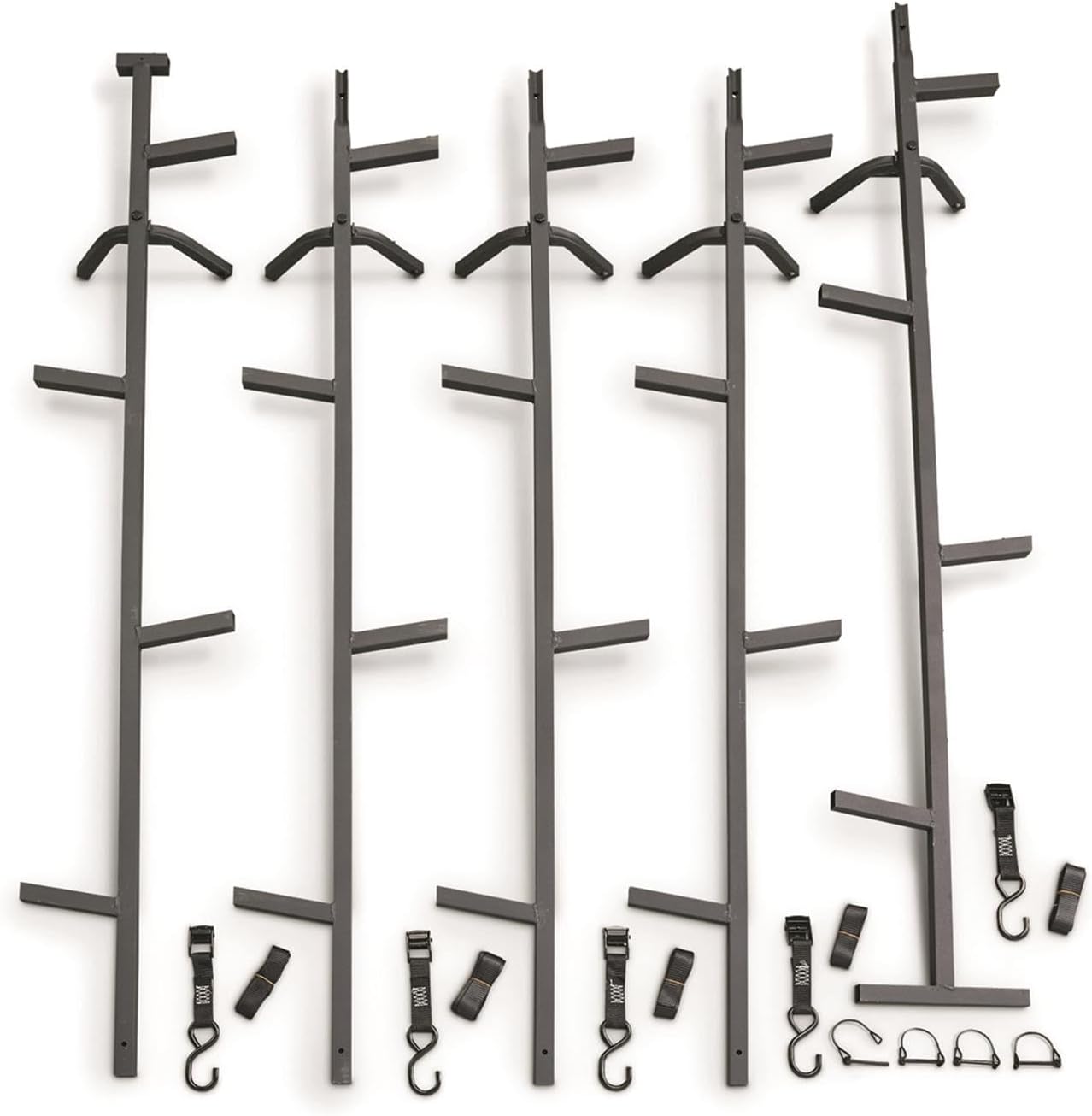
The ideal option for reaching great heights is the Guide Gear 25-foot Climbing Stick.Most standard sticks have a 20-foot length. That can put you squarely in the path of a deer in areas with poor cover.To start, it has a total reach of 25 feet, which is 5 feet greater than regular sticks.The next step is to attach the bottom section to the ground so the ladder has a solid foundation.
Lastly, there are five sections of angled steps mounted on tubular steel that can support up to 300 pounds.Downside: It’s the heaviest option here at 28.9 pounds. Difficult to navigate through dense vegetation, the sections measure approximately 63 inches in length.Hunters using elevated stands on private property will benefit the most. Everyone on a longer walk with a cane or walking stick should not use this.
4: Tomaki Aluminum Non-Slip Climbing Sticks, 4 Pack

The most cost-effective aluminum climbing stick set available—the Tomaki Aluminum Climbing Sticks.A mile before sunrise, your shoulders will tell you to carry steel sticks. Here the list becomes aluminum-based.To begin, a set of four aluminum sticks weighing in at around 11.5 pounds is significantly more manageable than the aforementioned steel ladders.The following is the highest rating on this list, with a weight limit of 350 pounds.
Lastly, for silent transportation, a V-shaped gear bracket screws into the tree, and a sliding lock clip secures the sticks together.One drawback is that Tomaki is not a well-known hunting brand. Stick length is not specified in the listing.For first-time mobile setup searchers, this is the way to go. Avoid: if you’re looking for a trusted brand.
3: Muddy Pro Climbing Sticks with Rope Cam Attachment

If you want a climbing stick arrangement that doesn’t include buckles, choose the Muddy Pro Climbing Sticks.Fastening a metal buckle is a real pain in low light and with chilly hands. They are entirely dropped by the Muddy Pro.Every stick must have a rope cam attachment first.Pull tightly while wrapping the rope, and the cam will hold.
After that, there are four 10-pound sticks with a 20-inch diameter in the middle and fold-out steps on each.The last option is the 300-pound aluminum bark biter, which can gnaw on both straight and twisted trees.The need for a tree with a diameter of at least 9 inches is a drawback. Along with Muddy’s own stands, these sticks are made to pack.Apt for: hang-on seekers who build and dismantle with each sit. Avoid: hunters on really tiny trees.
2: XOP X2 Double Step Climbing Sticks, 3 Pack

The most lightweight option for a long stroll is the XOP X2.With a mile separating the tree from the vehicle, every ounce matters. It was purpose-built for the X2.Using 6061 and 7075 aluminum, these sticks weigh just 1.6 pounds each, making them the lightest of the bunch.The following is a double step that is 10 inches wide, has a DuraGrip coating, and separates the steps by 17 inches.Last but not least: to avoid having your toes squished against the bark, leave at least five inches of space between your boot and the tree.
The set’s three sticks, rather than four, reduce the overall height when unboxed. It is not tied with rope but with cam straps.
On public territory, it is ideal for weighing ounces and for use by saddle hunters. Avoid if you’re a hunter who requires four poles of varying heights packaged together.
1: Hawk Helium 20″ Aluminum Climbing Sticks, 4-Pack

If you’re a mobile hunter, the Hawk Helium 20-inch climbing stick set is your best bet.As opposed to being on a tree, sticks like to be on your back. A single clank from loose aluminum can put a stop to a hunt before it even begins.To begin, stack the sticks tightly using Silent Lock suction cups. There isn’t another set like this one.Secondly, each stick is rated to 300 pounds and weighs 2.5 pounds.Third, for a secure footing in rainy situations, there are fold-up, dual-sided stairs with elevated ends and grip grooves.
As for the fourth point, a combination of the Versa Button strap system and aggressive bark-gripping teeth allows for a peaceful, secure fit.Downside: shorter sticks (20 inches) cover less ground than longer ones. The X2 is lighter per stick, but it’s not the lightest pick.For hunters who pack in and out every sit, saddle and hang-on hunting is the best method. Who it isn’t for: hunters who leave their stands up all season.
Things to Consider Before Buying a CLIMBING STICK:
Evaluating climbing sticks before making a purchase can enhance your outdoor experience significantly. Factors such as weight, height, stability, and material impact your safety and comfort during climbs. Understanding what features align with your needs not only maximizes performance but also ensures you choose a product that’s right for your adventures.
Single-stick and multi-stick systems
Single-stick systems are typically lightweight and easy to carry, perfect for mobile hunters. They allow quick setup, enabling you to ascend swiftly without weighing you down. Multi-stick systems, on the other hand, combine several sticks into a cohesive unit, enhancing stability and providing more clearance when climbing higher trees. The choice between the two depends largely on your personal climbing style and the hunting environment you plan to navigate.
Height, weight capacity, and packed size
Evaluating height and weight capacity is essential for ensuring your climbing stick meets your needs. Height should align with your intended use, whether for hunting or observation. Moreover, consider the weight capacity to ensure it can safely support not just you but any gear you’ll carry. Finally, packed size matters for transportability; opt for a model that collapses easily for storage or travel without sacrificing stability.
Material, durability, and tree compatibility
Choosing the right material can significantly impact durability and tree compatibility. Aluminum models tend to be lighter, while steel options offer increased strength but can add weight. Assess the type of trees you’ll encounter; some climbing sticks perform better on specific bark types. Investing in a weather-resistant finish can also enhance longevity, ensuring your climbing stick withstands the elements over time.
Attachment system and safety standards
Security in attachment systems cannot be overlooked. Look for models that feature reliable mechanisms, such as ratchet straps or locking pins, to ensure a firm grip against the tree. Additionally, check for compliance with recognized safety standards. Products certified by safety organizations offer peace of mind, affirming their reliability in critical situations, such as when climbing high trees during hunting seasons.
Define your climbing needs and budget
Assessing specific climbing needs begins with considering the terrain and type of climbing you plan to do. Whether your focus is on tree stand hunting or simply reaching elevated areas, understanding your primary use is essential. A budget is also crucial; prices vary significantly based on materials, brand reputation, and features. Identifying both your needs and financial limitations will streamline the selection process and direct you to relevant models.
Check specifications and verify compatibility
Next, specifications must align not just with your needs, but also with your equipment. Ensure that the climbing stick’s weight capacity matches your requirements, especially if you plan to carry additional gear. Compatibility with existing gear, such as harnesses or tree stands, is essential for safety and functionality. Reviewing each model’s detailed specifications can prevent mismatches that could result in unsafe climbing experiences.
Compare options and inspect safety features
Evaluating various models allows you to identify safety features that meet your requirements. Look for innovative designs incorporating features like slip-resistant grips or quick-release mechanisms that enhance security. Comparing ratings and customer reviews can provide insights into reliability and performance. An informed decision often highlights options that combine ease of use with advanced safety measures, ensuring a secure climbing experience.
Key advantages
Portability stands out as a primary benefit, allowing you to easily carry climbing sticks in diverse terrains. Many modern designs feature compact folding mechanisms, facilitating transport in vehicles or on foot. Setup time also improves with user-friendly features, enabling quick deployment when time is of the essence. These advantages ensure that you can maximize time spent in the field while minimizing logistical challenges.
Common limitations
Weight capacity and stability frequently pose challenges with certain climbing stick models. While lightweight options excel in portability, they may compromise on strength, leading to potential safety issues. Terrain types also limit effectiveness; uneven ground can impact the stability of lighter sticks. Understanding these limitations aids in making informed choices tailored to specific hunting environments.
Inspect Before Each Use
Examine your climbing stick thoroughly before each outing. Look for any signs of wear, such as frayed straps, cracked support beams, or rusted components. Even small damages can compromise safety, so ensure everything is intact. If performance issues are suspected, testing the stick on the ground can reveal any instability. Ending the inspection with a clear understanding of its condition leads to safer climbing experiences.
Secure and Test Each Section
Before ascending, make sure every section of the climbing stick is fully secured. Check that all connections are tight and properly locked in place. After assembly, test the stability by applying pressure on each section while on the ground. This practice helps identify any weak points that might not support your weight during use. A reliable setup is essential for maintaining safety while climbing.
Follow the Manufacturer’s Instructions
Consult the manufacturer’s guidelines for specific setup and usage instructions. Each climbing stick may have unique features that require particular attention. Understanding the correct deployment methods and weight limits ensures that you utilize the climbing stick effectively. Adhering to these recommendations minimizes risks associated with improper use and contributes to a safer climbing routine.
Final Words
Evaluating your options before buying a climbing stick ensures that your choice aligns with your specific needs and preferences. Consider the stick’s weight, portability, and height capabilities to enhance your climbing experience. Assessing materials and durability guarantees that your investment will withstand various weather conditions over time. Prioritize safety features, as they often determine your level of confidence when using the equipment. Ultimately, choosing the right climbing stick can significantly impact your outdoor adventures, making thoughtful decision-making essential.
Leave a Reply