
Best Climbing Tree Stands are what you need for safer, steadier hunts – no more shaky perches or sore legs. As an expert with years of field testing and clear tree stand reviews, I pick secure, lightweight hunting tree stands you can trust. These must-have, game-changing options bring confidence and peace of mind in the woods. Read on for top picks, safety tips, and buying advice to find your perfect match.
Contents
- Top 7 Climbing Tree Stands:
- 7: Summit Treestands Viper Steel Climbing Treestand
- 6: Ol’Man Multi-Vision Climbing Stand
- 5: Summit Treestands Mini Viper SD Climbing Treestand
- 4: Summit Treestands OpenShot SD Climbing Treestand
- 3: Summit Treestands Goliath SD Climbing Treestand
- 2: Summit Treestands Viper SD Climbing Treestand
- 1: Summit Treestands 180 Max SD Climbing Treestand
- Things to Consider Before Buying a Climbing Tree Stands:
- Climbing Stand Styles
- Common Materials and Features
- Fit, weight, and portability
- Comfort, materials, and durability
- Check the platform, seat, and attachment system
- Verify fit, specifications, and included safety equipment
- Match the stand to your tree and hunting needs
- Review setup instructions and safety practices
- Advantages
- Limitations
- To wrap up
Top 7 Climbing Tree Stands:
7: Summit Treestands Viper Steel Climbing Treestand

For those just starting out in mobile hunting, the Summit Viper Steel is the ideal climbing stand on a budget.Wear yourself out with the rattle, slip, and cheap climbers. For beginners, there’s the tried-and-true Viper Steel.A full-perimeter frame with a closed front is the first. Climb while seated or standing, and lay your weapon on the front bar.Here we will go to the QuickDraw cable system. A quick and silent locking of cables encircles the tree.
At long last, there’s a foam seat with a backrest that’s hanging from the bike, together with RapidClimb stirrups for your boots.Downside: it weighs 29 pounds, which is equal to the heaviest stand in this area. When the powder coat crumbles, steel might rust in those spots.Perfect for: first-time purchasers, short strolls, and private-land arrangements. Not for: hunters who meticulously weigh every pound on public land.
6: Ol’Man Multi-Vision Climbing Stand

When hunting with both a gun and a bow, the Ol’Man Multi-Vision is your best bet for a net seat climber.Climbers often force you into a single front-bar position, and foam seats can become rather harsh. Both are resolved by the Multi-Vision.First, a net seat that is 21 inches broad. Instead of placing your weight on a pad, it carries it for you.What follows is a 3-in-1 stand with three separate settings. You may run it straight like a traditional bar, or you can turn it into a foot rest or gun rest by flipping it.
A calm build, at last. It claims to be the market’s quietest climbing stand.Steel makes it 29 pounds, which is a drawback. The list’s thinnest platform is the 18-by-32-inch model.For those who prefer not to sit on foam, this is the ideal option for rifle and bow hunters. You won’t find this product suitable for hunters looking for a lightweight pack or a broad platform.
5: Summit Treestands Mini Viper SD Climbing Treestand

The ideal climbing stand for hunters with smaller frames is the Summit Mini Viper SD.The addition of a full-size climber to a smaller hunter increases the horse’s weight and makes it more difficult to wrestle. Both are trimmed by the Mini Viper.To start, this is 18 lb of aluminum, which is 11 lb lighter than the steel that is now displayed.What comes next: Dead Metal’s soundproofing. Because the frame is mostly foam, every bumped rail will sound like a thud rather than a ring.
Last but not least: a height-adjustable foam seat for bow or rifle shooting.Unfortunately, large boots and standing shots will not fit on the 20-by-32-inch platform. Hunting dogs with wide shoulders find the narrow seat frame uncomfortable.Ideal for: hunters with petite frames who prefer a more compact pack. Not suitable for: hunters with large frames who prefer more space.
4: Summit Treestands OpenShot SD Climbing Treestand

When it comes to climbing stands, bowhunters should get the Summit OpenShot SD.A rifle works wonderfully with a front bar. Exactly where you draw is where it should be for a bow. Because OpenShot gets rid of it.To start with, an open-front layout. There is nothing separating you from the shot.Here we go: fifteen pounds. This is the lightest stand available, designed for those long hikes in.At long last, a seat that folds up. Stand it upright against the tree by inverting it, and use the folded cushion as a backrest.
Downside: A pistol rest is not possible without a front bar. It requires more upper-body strength to climb without it. The 16 by 12-inch seat isn’t designed for relaxing.People that hunt with bows, hike through dense forests, or use run-and-gun tactics will find this the most suitable. Do not use if you are a restless hunter or if you plan to sit all day.
3: Summit Treestands Goliath SD Climbing Treestand
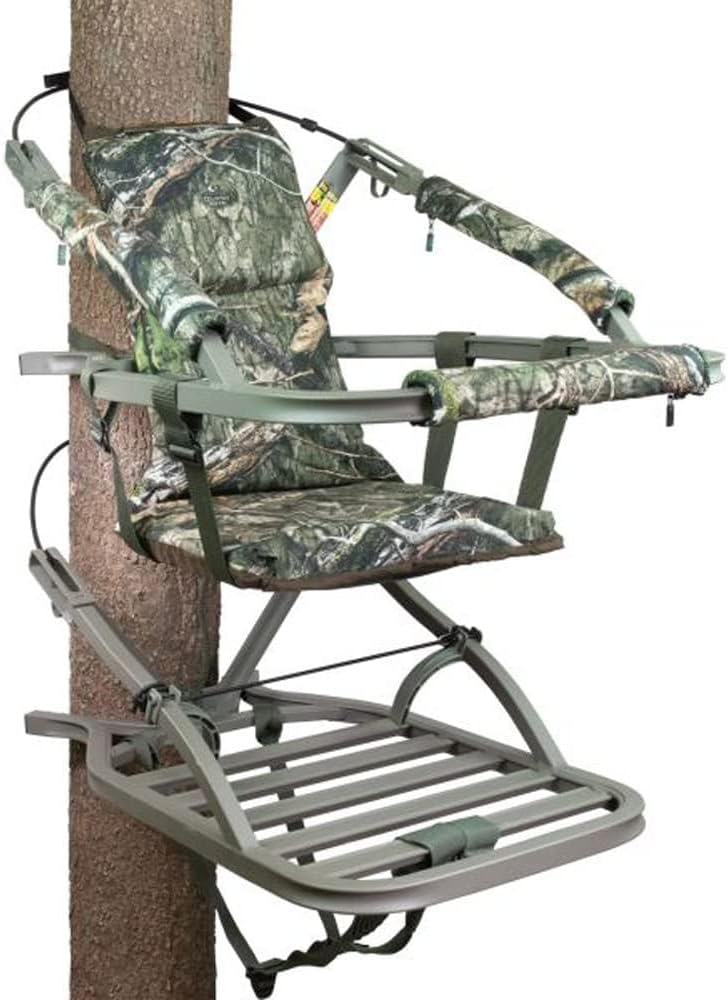
For huge, deep-diving hunters, there is no better climbing stand than the Summit Goliath SD.The average climber has a quite ordinary build. Big game hunters often find themselves trapped between the rails. A new chapter begins with the Goliath.To start, you can’t exceed 350 pounds, which is 50 pounds more than a regular Viper.After that, a roomier seat and a broader upper frame. Possibility to move about, change positions, and put on more clothing.
At 21 pounds, it’s just slightly heavier than the Viper SD by one, but it has the same Dead Metal quieting.Drawbacks: when wearing thick cover, the broader frame makes your back seem thicker. There is an excess of stand for smaller hunters.Ideal for tall hunters and hunters wearing thick clothes in the late season. Not recommended for hunters with tiny frames or those on a restricted budget.
2: Summit Treestands Viper SD Climbing Treestand

Most deer hunters choose the Summit Viper SD as their go-to climbing stand for any situation.Try to find a single stand that can accommodate both bows and rifles, is lightweight, and climbs quietly. All three are covered by the Viper SD.To start, there is a 300-pound limit on 20 pounds of aluminum. Straps for the frames are cushioned, so they may be packed compactly.The following item is a 20 by 36-inch platform that can accommodate a bow shot and has a closed front that also serves as a rest for the rifle.
The last piece of the puzzle is the Dead Metal soundproofing and the suspended foam seat, which comes with a padded backrest and armrests.Negative: A sitting bow pull may be overshadowed by the bar at the front. This stand isn’t the most airy or spacious option available.Ideal for: bow and rifle hunters that only need one stand. Avoid if you are a serious bowhunter or have a larger build.
1: Summit Treestands 180 Max SD Climbing Treestand

For hunters that sit from dusk till dawn, the Summit 180 Max SD is the best climbing tree stand.All of the other stands here only point in one direction: toward the trunk. Are there any deer trailing behind you? No creaks, you twist and hope. That is resolved by the 180 Max.To start, there’s a seat that can spin around completely. Face the tree, hide behind its trunk, and keep an eye on the side that’s furthest away. Among the local climbers, nobody does this.Next up is the Surround Seat, which is a fully-covered, suspended, foam-padded, and pocket-equipped seat.
Thirdly, the most spacious frame on the Summit. The largest seat frame here, with a platform measuring 21 by 38.5 inches.Fourth: no more than 350 pounds, including equipment.The 26-pound weight makes it cumbersome compared to other aluminum climbers. On a lengthy carry, the large frame becomes cumbersome.Ideal for: horses that sit all day, large hunters, and rut hunters who refuse to get off their horses. Avoid: hunters who are constantly cutting down trees.
Things to Consider Before Buying a Climbing Tree Stands:
Choosing the right climbing tree stand can significantly enhance your outdoor experiences. Assessing key factors ensures safety and comfort during your time in the field. Factors such as weight, height, and material can impact both portability and durability, making them essential points of consideration before making a purchase.
Climbing Stand Styles
Selecting a climbing stand requires understanding the various styles available. The most common types are the sit-and-stand models, allowing seamless transitions between sitting and climbing. Additionally, the self-climbing stands employ a strap and cam system for rapid ascent, providing convenience in diverse hunting scenarios. Compact and lightweight designs appeal to those requiring portability, while more extensive options offer stability and room for gear. Your chosen style should match your hunting strategy and comfort level.
Common Materials and Features
Materials play a significant role in the effectiveness and durability of climbing tree stands. Aluminum stands are frequently favored for their lightweight properties, making them easy to carry. Steel options offer added strength and longevity but may be bulkier. Key features to consider include adjustable straps for securing the stand, padded seats for comfort during long waits, and silent operation mechanisms to minimize noise while climbing. These attributes contribute to an overall better experience in the field.
Fit, weight, and portability
Selecting a climbing tree stand that fits your specific body type is essential for safety and effectiveness. Consider the stand’s weight if you plan to carry it over long distances; lighter models are preferable for portability. Evaluate the design, ensuring it accommodates your preferences for setup and adjustment. A compact stand can enhance mobility through thick woods. Think about equipment storage options in your vehicle; some stands come with built-in compartments for easier transport.
Comfort, materials, and durability
Comfort plays a significant role in your climbing experience, especially during long hunts. Look for stands featuring padded seating and ergonomic designs that minimize fatigue. Materials used in construction affect durability; aluminum stands provide a good balance of weight and sturdiness, while steel offers greater strength but at a heavier weight. Evaluate the weather resistance of the materials, particularly if you anticipate exposure to rain or snow. High-quality finishes can extend the life of your investment, protecting against rust and wear.
Check the platform, seat, and attachment system
Examine the platform and seat for comfort and stability, as a well-designed stand provides essential support during long waits. The platform should have enough space for your feet, while the seat must be padded and adjustable to match your height. Pay attention to the attachment system as well; it should be straightforward to operate and secure to prevent any unexpected shifts while in use.
Verify fit, specifications, and included safety equipment
Confirm that the dimensions of the stand fit your preferred tree types and your own size. Specifications such as weight, height, and design features should align with your comfort and accessibility needs. Additionally, review the included safety equipment, like harnesses and safety belts; these items not only enhance security but also ensure compliance with safety standards.
Match the stand to your tree and hunting needs
Selecting the right climbing tree stand involves evaluating both your tree’s characteristics and your specific hunting style. Some stands are designed for smaller trees, while others require sturdier trunks for support. If you primarily hunt in dense forests, opt for a lightweight, compact design that can easily be maneuvered. Conversely, if you favor open areas, a more stable and spacious stand may be beneficial. Assessing the typical diameter and height of your preferred trees will guide your choice effectively.
Review setup instructions and safety practices
Understanding the setup instructions for your climbing stand is essential for safe and effective use. Most manufacturers provide detailed guides that outline proper assembly and mounting techniques. Familiarizing yourself with these instructions in advance can prevent confusion in the field. Always check the locking mechanisms and safety harness before each use to ensure everything is in optimal condition. Practicing your climbing method in a controlled environment can also enhance your confidence when you’re out in the field.
Advantages
Lightweight designs make climbing tree stands a popular choice among hunters. Many models can be easily transported, allowing for quick setups in various locations. Portability reduces the burden of carrying heavy equipment into the field, enabling you to access remote hunting spots with ease. Typically, these stands also offer versatility, often accommodating different tree sizes and shapes, making them a flexible option for various terrains.
Limitations
Flexibility comes with a price, as climbing tree stands often require trees with specific characteristics for safe installation. Certain trees might not meet safe climbing requirements, limiting potential hunting locations. Setup can be time-consuming and often demands practice to achieve proficiency, particularly for those new to climbing stands. As a result, opting for these types of stands might not suit everyone’s needs, especially if quick deployment is a priority.
To wrap up
Assessing your needs before purchasing a climbing tree stand guarantees an informed decision. Prioritizing factors such as comfort, weight capacity, and safety features can significantly impact your hunting experience. Consider your preferred hunting style and terrain, as these will influence the selection. Evaluating well-reviewed brands and models also aids in avoiding pitfalls associated with subpar equipment. Investing time in research will enhance your overall enjoyment and effectiveness in the field.
Leave a Reply