
Best Duck Decoys: tired of blank blinds and missed shots? This guide, assembled by seasoned waterfowl hunters and gear experts, shows realistic decoys and durable, easy-to-use picks to boost your duck hunting success. These game-changing, proven decoys will deliver the thrilling hunts you want and restore your confidence. You’ll learn how to choose, place, and maintain them for consistent results. Read on to find our top-rated picks and simple setup tips.
Contents
- Top 7 Duck Decoys:
- 7: Mojo Outdoors Butt Up Rippler, Mallard
- 6: Final Approach Last Pass Mallard Floaters, 12 Pack
- 5: Flambeau Storm Front 2 Mallard Decoys, 6-Pack
- 4: Avian X Topflight Green-Winged Teal Decoys, 6-Pack
- 3: Avian X Topflight Wood Duck Decoys, 6-Pack
- 2: MOJO Elite Series Mini Mallard Spinning Wing Decoy
- 1: Higdon Outdoors Pulsator PRO Motion Waterfowl Decoy
- Things to Consider Before Buying a Duck Decoy:
- Floating Decoys for Open Water
- Full-Body and Shell Decoys for Field Hunting
- Motion and Spinning-Wing Variations
- Visual Realism and Anatomical Accuracy
- Paint Durability and Low-Glare Finishes
- Weight and Portability for Remote Access
- Hard Plastic vs. Foam-Filled Construction
- Collapsible and Inflatable Lightweight Options
- Seasonal Cleaning and Paint Protection
- Proper Storage to Prevent Structural Damage
- Creating Realistic Spread Patterns
- Utilizing Wind and Current for Natural Movement
- Final Words
Top 7 Duck Decoys:
7: Mojo Outdoors Butt Up Rippler, Mallard

If you own a spread, the greatest way to add motion to it on a budget is with the Mojo Butt Up Rippler.Identical to their real-life counterparts, six decoys rest on glass-flat water.The first is a feeding position with the butt up, which is the most comforting shape for a duck to see from above.Afterward, it causes all the other decoys in your spread to begin shaking because it ripples the surface surrounding it.
Lastly, your morning and evening hunts can be completed with six to eight hours of runtime on just four AA batteries.Downside: you won’t get batteries with it, and it uses up batteries quickly. Not a spread, but just one decoy. In chop, ripple movement vanishes.Who it’s best for: hunters who have decoys on hand. Not for: individuals beginning with zero.
6: Final Approach Last Pass Mallard Floaters, 12 Pack
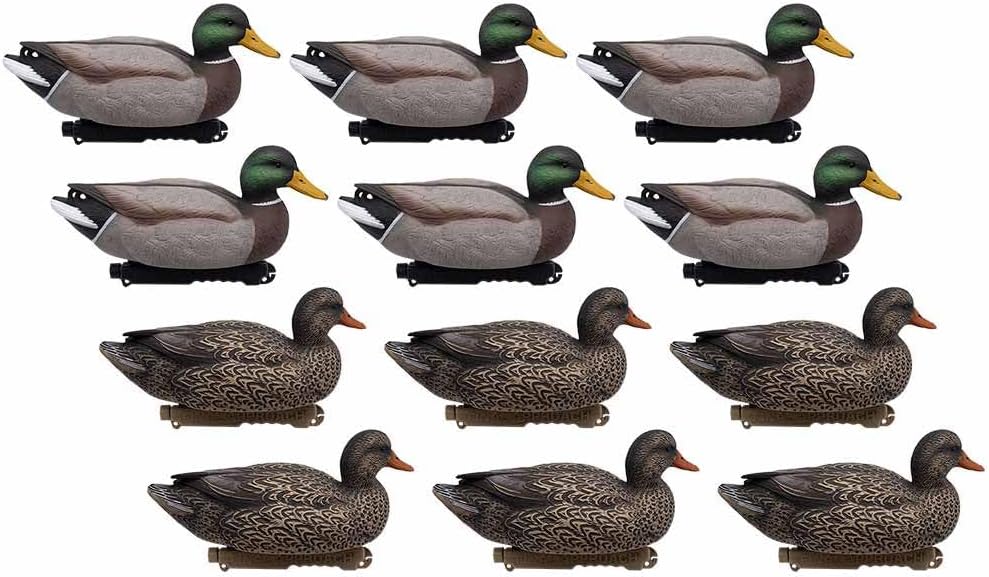
As far as carryable decoy numbers go, The Last Pass Mallard is your best bet.Floaters of full size are cumbersome, and a walk-in hunter will deplete their bag much before their ambition does.First, the bodies are 12 inches long from beak to tail; six years ago, there were six.The next thing is a pack of twelve decoys, which is a more reasonable spread than buying three separate sets.
Last but not least: high-density polyethylene one-piece sculptured by world-renowned artist Pat Godin. There are no flapping seams or snappy heads.Disadvantages: On open water, birds have a difficult time seeing the tiny profile. There is no paint detail. Minimal effort is required to lift a kettlebell.Who it’s best for: Quickly increasing volume for walk-in hunters. Big water, where the hunt is decided by long-range vision, is not the place for this.
5: Flambeau Storm Front 2 Mallard Decoys, 6-Pack
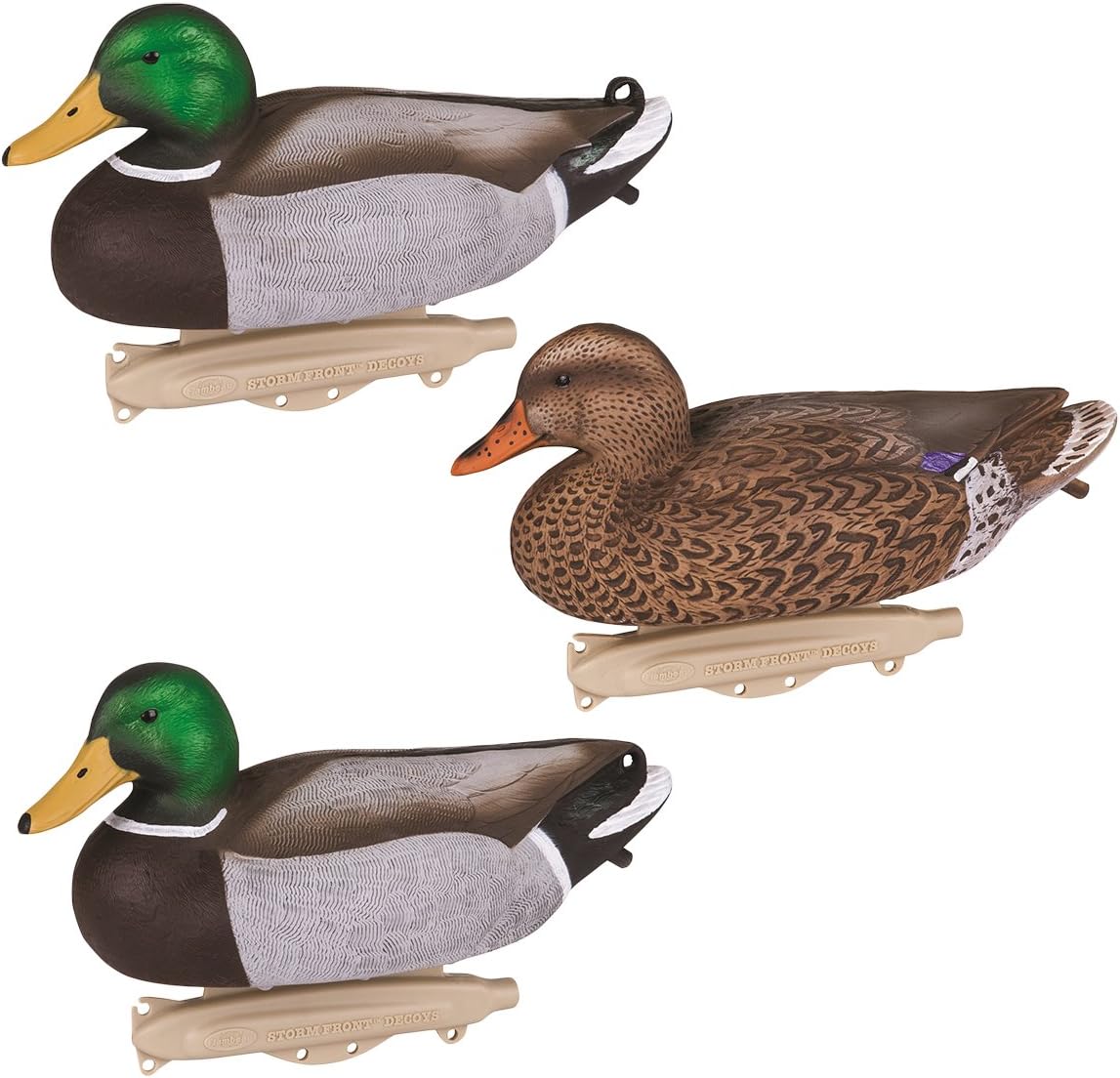
The ideal all-around first six—the Flambeau Storm Front 2 Mallard.While hunting, a specialist spread is usually unnecessary. Six mallards of the full size, adaptable variety, are required.To start, there are the complete 14-inch bodies that professional carvers Rich Smoker, Dave Van Lanen, and Tom Christie sculpted.The next step is UVision paint, which mimics the UV spectra seen by ducks but not by humans.
At last, the rig for calm water or current is a keel with four anchor eyelets and a depth-adjusting system.The open ocean makes it difficult to use six decoys. Big bodies consume bag space. Complete lack of movement.Who it’s best for: newlyweds and those repairing a spread. Avoid if you’re a hunter in need of rapid volume.
4: Avian X Topflight Green-Winged Teal Decoys, 6-Pack

For tiny water and the lightest carry, use the Avian X Topflight Green-Winged Teal.Putting mallard bricks on a half-acre pothole not only makes a long trek longer, but they also look odd.To start, we have actual teal-sized bodies, which are much smaller and lighter than a mallard block.The next step is a swim keel that allows the birds to swoop and swim with the slightest breeze.
Last but not least: a mature green-wing model covered in no-flake paint—it makes it through a bag of decoys that bang together.Negative: at a distance, turquoise bodies are difficult to see. Beyond small potholes, six is thin. Incorrect bird, incorrect day.Ideal for: small-water walk-ins and early-season teal hunters. Avoid in late-season mallards and open water.
3: Avian X Topflight Wood Duck Decoys, 6-Pack
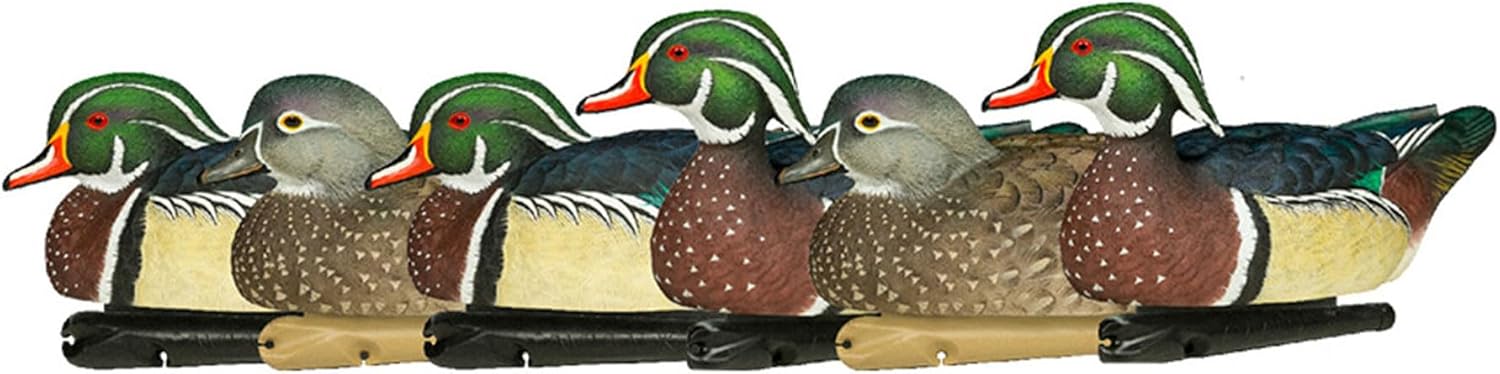
Best premium spread for woods, creeks, and beaver ponds—the Avian X Topflight Wood Duck.Water mallards never touch, wood ducks work tight, and nearly no one decoys for them.An enlarged 12.5 inches in length from head to tail is the first thing that birds see when they fly through a dense forest.Next: a molding material that is rubberized rather than rigid plastic. It easily brushes aside tree stumps, truck beds, and trunks.
Last but not least: a little spread reads comfortable thanks to three positions over six decoys: low-head drakes, low-head hens, and high-head drakes.Drawbacks: this is the most expertly targeted option available—wood ducks exclusively. The spread is minimal, with six bodies. The open water is seen from the huge profile.For the best results, seek out a beaver pond, a creek, or woodland. Hunting mallards or open marshes is not for you.
2: MOJO Elite Series Mini Mallard Spinning Wing Decoy

If you’re looking for a miniature mallard with spinning wings but no rattling, go no further than the MOJO Elite Series.As soon as they hear cheap spinners swaying and buzzing across the marsh, stressed-out birds pick up on the sound.One structural support frame holds the body, transmission, power source, and engine. Relatively low noise and almost no wobbling.After that, a cam-lock pole and magnetic quick-attach wings—you can assemble or disassemble them in the dark without using any tools.
Lastly, the housing may be easily removed from the decoy skin for cleaning and servicing, saving you the trouble of replacing it.The lack of accompanying batteries is a drawback. Before you buy spinning wings, be sure you know the rules in your state or region.Who it’s best for: desperate birdwatchers who are sick of constantly buying new, inexpensive spinners. Restrictions on spinning wings do not apply here.
1: Higdon Outdoors Pulsator PRO Motion Waterfowl Decoy

In 2026, the most technologically advanced motion decoy available, the Higdon Pulsator PRO, will be the best duck decoy.The other decoys here are also waiting for the wind. The birds will glide to the next pond when your spread freezes on a dead quiet morning.To begin, a digital timer operates autonomously to squirt water in a visible spray at predetermined intervals. Disturbance on the surface, but no wind.Secondly, the decoy functions while the spray advertizes thanks to the body’s foam-filled swaying and feeding motion.
Thirdly, it can use fresh, salt, or brackish water with a depth of as little as six inches.The fourth feature is a magnetic switch and an IPX7 waterproof shell that allows for a seven-hour runtime and a three-hour recharge.Downside: you’ll still need a spread to surround it since it’s just one decoy. You need a cord and a weight for each set of rigging. A little body of calm water is engulfed in the shower.Ideal for hunters on placid waters, those in flooded woods, and birds that are under stress. Not recommended for: first-time buyers or peaceful ponds.
Things to Consider Before Buying a Duck Decoy:
Buying a duck decoy involves understanding your hunting environment and the specific species you aim to attract. Factors like material, design, and realism can significantly impact your success in the field. Making informed choices will enhance your experience and increase your chances of a fruitful outing.
Floating Decoys for Open Water
Floating decoys are necessary for open-water scenarios, effectively mimicking the natural movement of ducks. Their design ensures stability on water surfaces, creating a lifelike presence that attracts passing birds. Different species are available, allowing hunters to match the decoys with specific local populations.
Full-Body and Shell Decoys for Field Hunting
Full-body and shell decoys suit field hunting, offering easy transport and lifelike appearance. Full-body decoys are designed with intricate details, enhancing realism, while shell decoys provide lightweight options that can be quickly deployed across various terrains.
Full-body decoys often feature high-quality materials that enhance their durability and realism. They’re particularly beneficial during land-based hunts, allowing you to efficiently create a realistic setup. Shell decoys excel in portability, making them ideal for hunters who need to switch spots frequently. Both types are effective in various conditions, but selecting the right one depends on your specific hunting strategy and environment.
Motion and Spinning-Wing Variations
Motion decoys mimic the movements of real ducks, enhancing your setup’s attractiveness. Spinning-wing variants feature rotating wings that simulate the motion of feeding or landing birds, drawing in ducks from a distance. Their technology can often create a more engaging visual cue.
These variations can significantly enhance hunting effectiveness, particularly in larger water bodies where static decoys may not suffice. The movement captured by motion decoys often prompts curiosity and draws ducks closer than they would be inclined to approach stationary models. Using a combination of motion and stationary decoys can lead to optimal results, particularly during high-traffic migration periods.
Visual Realism and Anatomical Accuracy
Decoys that closely mimic real ducks in both appearance and size can significantly improve your chances of attracting live birds. Pay attention to intricate details, such as feather patterns and body shapes.
Paint Durability and Low-Glare Finishes
High-quality paint that withstands the elements ensures your decoys look fresh over time. A low-glare finish minimizes reflection, making them less detectable to wary ducks.
Investing in paint durability is important, as decoys often face harsh outdoor conditions. Look for products that utilize UV-resistant pigments and protective coatings, which enhance longevity. Decoys with low-glare finishes, typically matte rather than glossy, can blend more effectively into natural surroundings, thus improving concealment and increasing attraction rates.
Weight and Portability for Remote Access
Lightweight decoys offer easy transport, particularly if you’re moving to less accessible hunting spots. Consider how many decoys you can carry while maintaining effectiveness.
Balancing weight and functionality is key when selecting decoys for remote access. Lightweight materials make it easier to carry a larger number, enhancing your setup options. Some manufacturers provide compact designs that compress for efficient packing without sacrificing realism, allowing you to reach your hunting location without exhausting your energy reserves before the hunt begins.
Hard Plastic vs. Foam-Filled Construction
Hard plastic decoys provide exceptional durability, suitable for diverse environments. In contrast, foam-filled options offer better realism and camouflage, appealing for close-up visibility when hunting. Each material serves distinct purposes based on conditions and user preferences, impacting performance directly.
Collapsible and Inflatable Lightweight Options
Collapsible and inflatable decoys cater to hunters prioritizing convenience and portability. Offering easy setup, these options tend to be lightweight, making logistics simpler in the field.
Hunters seeking practical solutions often find collapsible models ideal. These decoys fold flat for storage, taking minimal space in your gear. Inflatable designs can also effectively mimic natural movement on water, attracting ducks. However, using these lightweight options requires caution as punctures can diminish effectiveness quickly. Understanding your hunting conditions will guide your choice, ensuring the right balance between portability and performance.
Seasonal Cleaning and Paint Protection
Cleaning your decoys at the end of each season prevents buildup that can attract unwanted pests. A gentle soap solution will remove dirt, while a coat of protective spray or paint helps maintain the surface integrity during storage.
Proper Storage to Prevent Structural Damage
Storing decoys properly is important in maintaining their structural integrity. Containers should be padded or lined to prevent scratches or dents during transport. Keeping decoys upright or suspended can also avoid deformation, particularly for softer materials.
Using storage bins specifically designed for decoys will optimize your organization. Opt for bins that allow easy stacking without risking compression of painted surfaces. For added protection, consider individual bags for especially delicate models to ensure they remain in peak condition for each hunting season. A well-planned storage solution not only safeguards your investment but streamlines preparation for your next outing.
Creating Realistic Spread Patterns
Developing realistic spread patterns involves spacing decoys to mimic natural flock dynamics. Place some decoys closer together to simulate social interaction while leaving space for approaching birds. Positioning a variety of decoy types can further enhance the visual appeal, inviting ducks with differing preferences.
Utilizing Wind and Current for Natural Movement
Taking advantage of wind and current adds a layer of realism to your decoy spread. Proper positioning allows decoys to move in a natural, enticing way, simulating feeding or resting behaviors that attract ducks.
Wind direction plays a key role in creating movement. Position decoys so that they face into the wind, allowing them to bob and sway naturally. In waters with current, align decoys with the flow, which can enhance their appeal as they drift gently. Observing these effects increases your chances of luring birds, as they are drawn to realistic movements that mimic their natural environment. Adjusting your setup based on wind patterns throughout the day keeps your spread dynamic and engaging for passing ducks.
Final Words
Choosing the right duck decoy requires careful thought about factors such as material, weight, and type. Select options that best suit your hunting style and local conditions. Investing in high-quality decoys can significantly enhance effectiveness, ensuring a successful outing. Quality gear often translates into a more rewarding experience in the field.
Leave a Reply