
Finding the best game cameras shouldn’t feel like a guessing game when you’re trying to track that elusive trophy buck. It’s incredibly frustrating to check your SD card only to find blurry, washed-out images of empty woods. Our expert guide reveals top-rated trail cameras with lightning-fast trigger speeds to capture stunning, crystal-clear wildlife shots every time. Let’s dive into the top picks that will transform your scouting game today.
Contents
- Top 7 Game Cameras:
- 7: GardePro E6 WiFi Trail Camera
- 6: SPYPOINT Flex-M Cellular Trail Camera
- 5: Stealth Cam Deceptor No Glo Cellular Trail Camera
- 4: Bushnell Core S-4K No Glow Trail Camera
- 3: Moultrie Edge 3 Cellular Trail Camera
- 2: Tactacam Reveal Pro 3.0 Cellular Trail Camera
- 1: Tactacam Reveal Ultra Cellular Trail Camera
- Things to Consider Before Buying a Game Camera:
- Flash Technology: No-Glow vs. Low-Glow
- Trigger Speed and Recovery Time
- Detection Range and Sensor Sensitivity
- Benefits of Remote Monitoring
- Maintenance and Hidden Costs
- Matching Specifications to Budget
- Final Words
Top 7 Game Cameras:
7: GardePro E6 WiFi Trail Camera
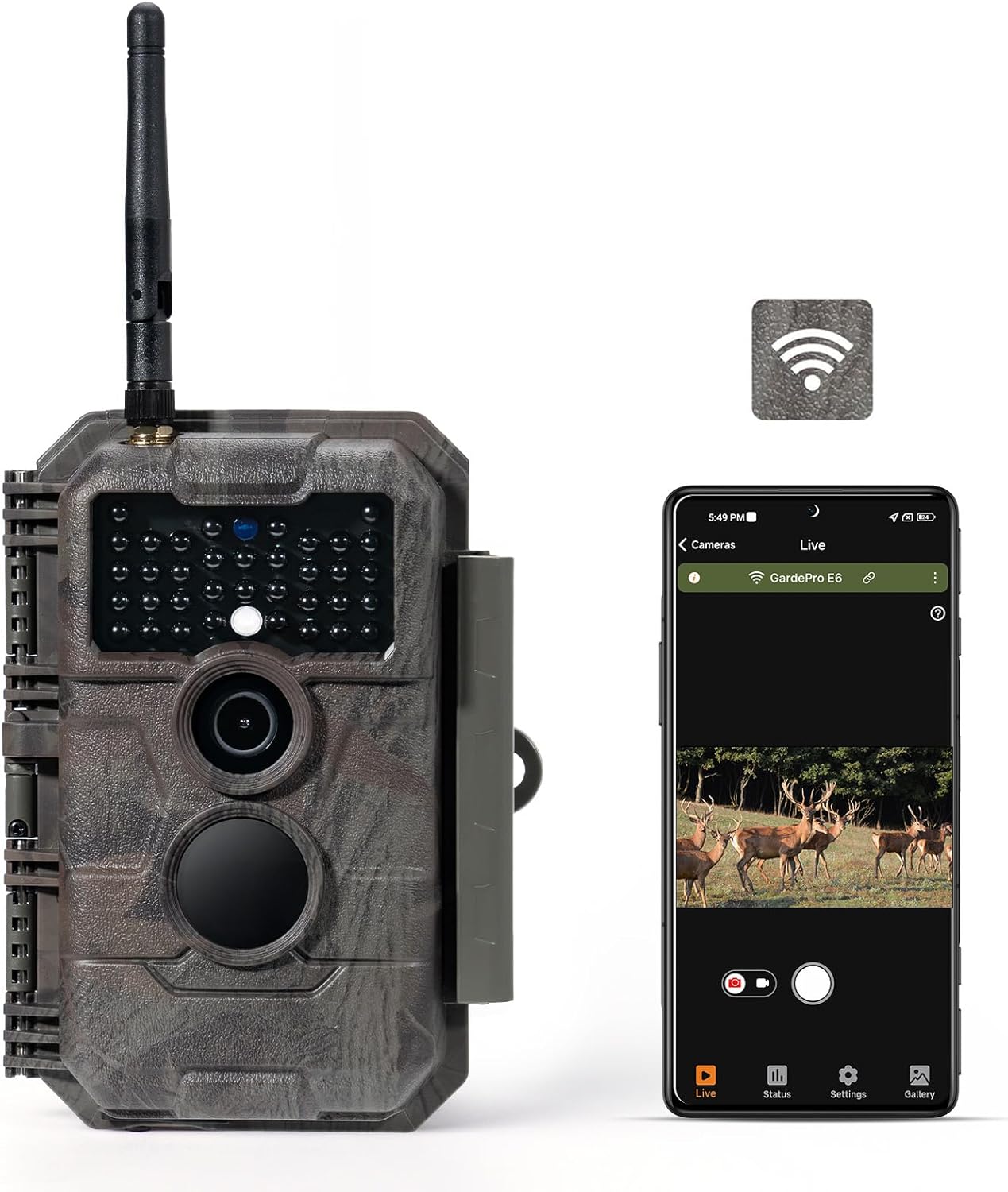
For hunters without a monthly budget, the GardePro E6 is the ideal game camera.Your monthly data plan costs will add up quickly if you use a cellular camera to send photos anyplace. That was skipped by the E6.To start, you can age a buck or count tines with the 64MP stills and 1296p HD video.The next step is to avoid upsetting the deer by using the tree’s built-in WiFi and an external antenna to transfer photos to your phone.
Lastly, your scrape will remain undetectable after dark thanks to no-glow night vision.There is no way to receive warnings from the comfort of your own home since WiFi is only effective within a certain range. Theft disables GPS. On occasion, the app may experience delays.Ideal for: thrifty hunters and frequent light foot traffic on smaller properties. Who this isn’t for: hunters who require far-off photographs.
6: SPYPOINT Flex-M Cellular Trail Camera

The SPYPOINT Flex-M is the most effective and reasonably priced method of remotely sending images to your mobile device.Driving out to check it is required under the E6. The Flex-M eliminates that travel entirely.To begin, unlike single-network devices, dual-SIM LTE automatically links to the strongest carrier, allowing it to function even amid dense forest cover.Also, the free SPYPOINT app will send you 28MP photographs with sound the second a deer triggers the sensor, so you won’t have to worry about walking into any of them.
Last but not least: a weather-sealed body with an IP65 rating can last an entire season on a single battery.Con: the highest quality video is 720p, which is great for intros but too low for longer clips. Every day, the free plan limits the number of images you can do. Average trigger.Optimal for: rural areas and first-time cellular customers. Hunters expecting smooth footage or an infinite photo library won’t like this.
5: Stealth Cam Deceptor No Glo Cellular Trail Camera

When hunting adult, stressed deer, nothing beats the stealth cam deceptor no glow.At night, less expensive cameras emit a subtle red light. The path is no longer travelled by the apprehensive buck after just one glance.The first is that a real no-glow flash can shoot invisible infrared light up to 80 feet, which a scared deer won’t be able to detect.Next, compared to low-end mobile cameras, the 40MP stills and 1440p video provide more detail.
Finally, you may use it with either AT&T or Verizon; just choose the one with the stronger bars where you are.Downside: Compared to expensive competitors, 80-foot detection is not as long. It can be a pain to set up the app. None of those fancy solar panels or GPS systems.Optimal for: hunters pursuing mature bucks with excellent pinch-point skills. Avoid in open areas that require long range.
4: Bushnell Core S-4K No Glow Trail Camera

If you’re a hunter looking for the finest game camera, go no further than the Bushnell Core S-4K.When sending photos, cellular cameras reduce their file size. The Core directly stores high-quality files to the card.First, high-definition video and clear stills—the type of detail that elevates a trail shot to the level of a picture fit for a gallery wall.The next step is to combine night vision with a no-glow flash so you can get clear, well-lit images even when the sun isn’t shining.
Lastly, you can frame the camera and check film right at the tree thanks to a 1.5-inch color viewscreen.The lack of cellular service necessitates physically going inside to retrieve your ticket. Absence of GPS tracking. From the comfort of your own home, there are no live alerts necessary.People who love high-quality images and who are against subscriptions would love this. Do not use this service if you require remote photo delivery.
3: Moultrie Edge 3 Cellular Trail Camera

The most advanced popular cellular camera ever made, the Moultrie Edge 3, is designed to locate your dollars.The majority of cell cams will take a deluge of photographs of nothing but branches, squirrels, and blowing grass. The noise is filtered out by the Edge 3.First things first: AI Buck Detection will automatically highlight any deer that are antlerless, allowing you to skip to the important animals.Next, a 100-foot detection range and a half-second trigger allow us to capture fast-moving deer as they cross the picture from edge to edge.
Lastly, the built-in GPS helps recover the signal if it moves off, and multi-carrier auto-connect gets the best signal itself.Compared to 1440p, 1080p video is inferior. AI tagging has its limitations. There must still be a data plan.For professional scouts using many cameras, this is the best option. Those looking to save money or avoid subscriptions should not use this.
2: Tactacam Reveal Pro 3.0 Cellular Trail Camera

When all you need is a reliable cellular camera for hunting, go no further than the Tactacam Reveal Pro 3.0.All the fancy features won’t matter if the camera dies or loses signal in the middle of the season. Count on the Pro 3.0 to be dependable.To start, it doesn’t require any carrier setup to automatically connect to the strongest network the second it is turned on.Next, with Tactacam’s on-demand video feature, you can direct the app to any camera and ask for a new clip straight away.
At last, it has a built-in GPS that can pinpoint its exact location in the event of theft, and a no-glow infrared flash that remains undetectable at night.The video and stills only go up to 1080p, which isn’t as good as competitors’ 4K offerings. One must have a data plan. No solar panels without an accessory.Ideal for: hunters who want a property-wide system that they can set and forget. Not for: people who want the most detailed 4K video possible.
1: Tactacam Reveal Ultra Cellular Trail Camera

When it comes to gaming cameras in 2026, the top pick is the Tactacam Reveal Ultra, the flagship model that allows for live feed reconnaissance.Images from all the other cameras show what has already transpired. The Ultra displays your location in real time.First, watch a live stream from the forest from any location with just the touch of a button—it’s all available through the app.Second, it captures 4K stills and 2.5K video with a trigger speed of less than half a second and a burst mode of 9 shots, so you won’t miss a passing deer.
Lastly, a flash that can be toggled between low-glow and no-glow modes operates at 96 feet for range and 80 feet, respectively, for pressured dollars.Fourth, it has a 2-inch LCD and GPS thief tracking; you can frame it at the tree and then locate it if it runs away.This is the most expensive option available. A data plan is necessary for live view. A learning curve is there in the app.Who it’s best for: dedicated hunters and land managers who need constant monitoring. Budget or simple setups are not suitable.
Things to Consider Before Buying a Game Camera:
Cellular cameras allow immediate image transmission to your device, offering convenience and instant access. In contrast, traditional SD card models require physical retrieval of images, making them less suitable for remote monitoring. Both options have unique advantages depending on your requirements.
Flash Technology: No-Glow vs. Low-Glow
Flash technology significantly impacts how cameras capture images at night. No-glow cameras remain entirely invisible to wildlife, preventing disturbances. Low-glow options produce a subtle red light, which may not alarm animals but can be noticeable.
Choosing between no-glow and low-glow technologies involves balancing visibility and wildlife behavior. For example, if your primary goal is to capture discreet nighttime activity without drawing attention, a no-glow camera may be preferable. Alternatively, a low-glow camera can still provide valuable nighttime images, often at a lower price point. This detail can influence your decision significantly, especially in areas where wildlife is sensitive to light disruptions.
Trigger Speed and Recovery Time
Trigger speed determines how quickly the camera activates upon detecting movement. A shorter trigger speed, ideally less than a second, ensures that even fast-moving wildlife is captured. Recovery time refers to how quickly the camera resets to capture subsequent images.
Detection Range and Sensor Sensitivity
Detection range is the maximum distance at which the camera can effectively detect activity. Sensor sensitivity affects how well the camera picks up movement in varying conditions. A well-balanced setup enables better monitoring of wildlife behavior.
Camera sensors vary widely in terms of detection range and sensitivity. Some high-end models offer ranges up to 100 feet, allowing for coverage of expansive areas. Sensitivity can often be adjusted, helping to minimize false triggers from wind-blown grass or small animals. Assess these factors based on your specific monitoring needs.
Benefits of Remote Monitoring
Remote monitoring allows for real-time access to footage, making it easier to track wildlife or ensure security. With this feature, adjustments can be made without physical presence, enhancing convenience and efficiency. You can receive instant alerts and notifications about movement or other specific triggers.
Maintenance and Hidden Costs
Regular maintenance can add hidden costs to owning a game camera. Battery replacements, memory card purchases, and potential repairs for advanced features may not be immediately apparent. Expenses accumulate, especially if the camera requires frequent upgrades or replacements.
Upkeep often demands attention, especially for cameras equipped with advanced technology. Many models may require specific batteries that can be more expensive than standard options. Memory cards designed to work seamlessly with high-resolution settings can cost significantly more. Planning for these ongoing costs ensures that you are fully prepared for owning an advanced model.
Matching Specifications to Budget
Choosing a camera requires careful financial consideration. Higher-end models may offer advanced features like faster trigger speeds or better resolution, but many mid-range options also provide excellent functionality. Thoroughly research camera specifications, focusing on what directly affects your needs.
Final Words
Prior to purchasing a game camera, consider camera resolution, detection range, and battery life. Evaluate how these factors align with your specific needs, such as wildlife observation or security monitoring. Testing various models in your desired environment can also provide clarity, ensuring the camera performs optimally in real-world conditions.
Leave a Reply