
Best Hunting Boots can make or break your season-blisters, cold feet, and poor traction ruin good hunts. As an experienced hunter and gear tester, I handpicked field-tested, waterproof and insulated models that keep you warm, dry, and sure-footed. These game-changing boots deliver lasting comfort and fierce confidence on every trail. Ready to stop wasting time and find the perfect pair? Read on for top picks and buying tips.
Contents
- Top 7 Hunting Boots:
- 7: R RUNFUN Men’s 8″ Waterproof Hunting Boots, 200g Thinsulate
- 6: LaCrosse Men’s Grange 18″ Waterproof Hunting Boot
- 5: LaCrosse AlphaBurly Aero 17″ Waterproof
- 4: Under Armour Whitetail HOVR Dawn 2.0 Waterproof Boots
- 3: MUCK Men’s Arctic Pro Insulated Boot
- 2: ROCKY ProLight Hunting Waterproof Snake Boot
- 1: Irish Setter Elk Tracker 12″ Mens Hunting Boot
- Things to Consider Before Buying a Hunting Boot:
- Material Durability and Weight
- Rubber and Neoprene Options
- Leather and Synthetic Hybrids
- Stiffness for Ankle Support
- Measuring for Socks and Foot Swelling
- Trialing Boots for Pressure Points
- Seasonal Utility Considerations
- Post-Purchase Maintenance
- Final Words
Top 7 Hunting Boots:
7: R RUNFUN Men’s 8″ Waterproof Hunting Boots, 200g Thinsulate

For those on a tight budget, nothing beats the R RUNFUN 8-inch as an early season boot.When it starts to rain, most hunters’ trusty old work boots reveal their lack of waterproofing.The first item is 200 grams of 3M Thinsulate. Mornings in October will be warm enough, but not so hot that you’ll burn your feet walking in.Then there’s the outsole, which is lightweight and made of rubber and EVA and features mud-shedding lugs; it boasts a waterproof camo upper.
In the box, you’ll find two sets of insoles. On mild days, it’s thin; on cold days, it thickens.Downside: A December sit won’t fit in 200 grams. Unlike full-grain leather, the fabric upper shows scuffs more easily. On hilly terrain, ankle support is minimal.Suitability: novice hunters and early-season whitetails. Avoid: steep-country hunters and late-season sitters.
6: LaCrosse Men’s Grange 18″ Waterproof Hunting Boot
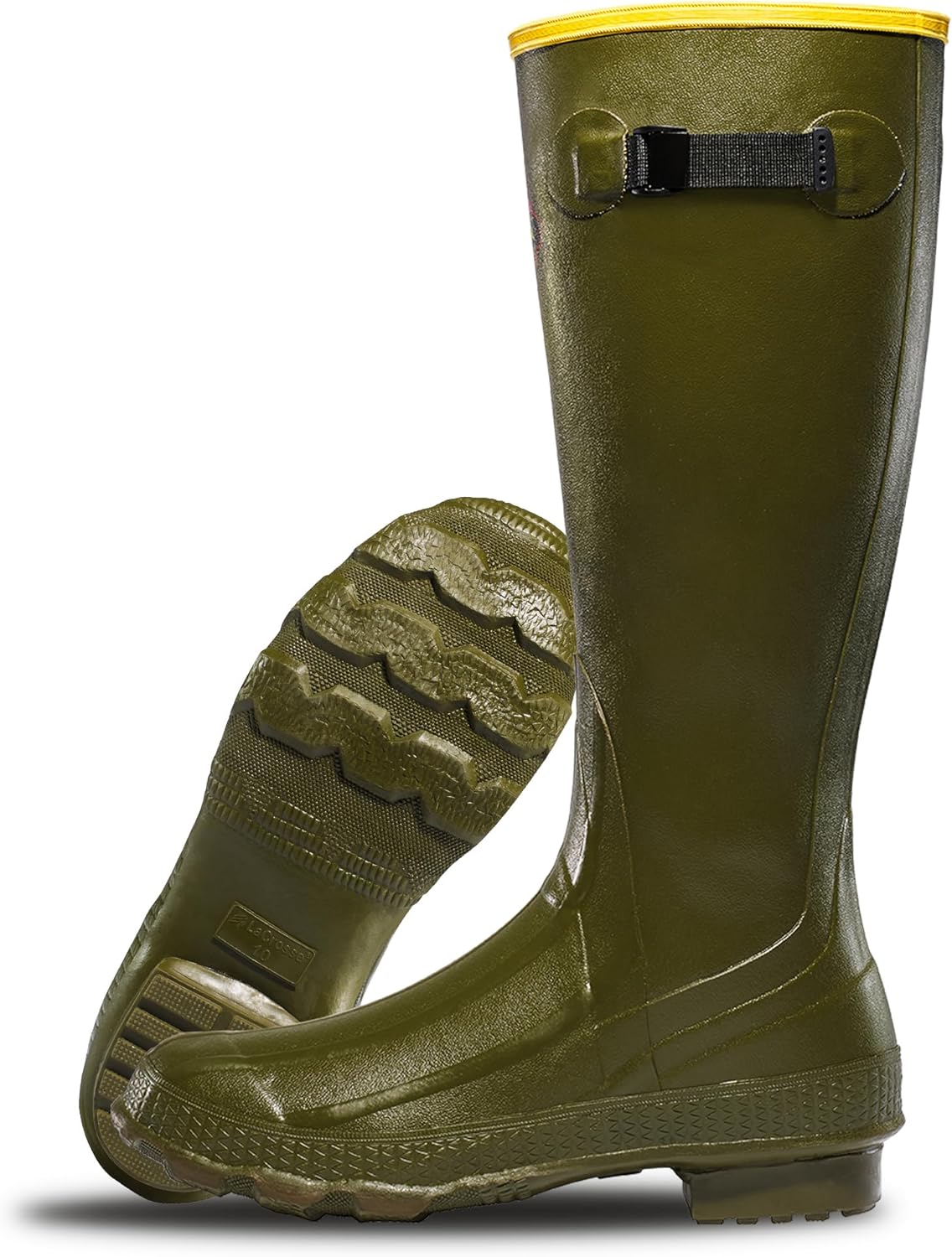
For stand hunting, nothing beats a pair of scent-free rubber boots like the 18-inch LaCrosse Grange.A whitetail deer’s nose can detect the scent of leather long before the animal is visible.The first step is a natural rubber construction that is hand-laid; there is no leather to trap smell. For many years, stand hunters have been operating it.The next step in keeping an 18-inch boot from sloping when worn is the Ankle-Fit heel lock, which is complemented by an adjustable top strap.
At last: an 18-inch shaft that divides the mucky space between the truck and the stand from the flooded timber and briar.Not insulated, so you’ll need a thick sock when it’s chilly. Rubber weighs more than leather when measured in miles. Not tied so you can adjust the fit.Approved for: whitetail deer stand hunting and wet-ground walking. Those who go for deep-cold sits or mountain hunts should not attempt this.
5: LaCrosse AlphaBurly Aero 17″ Waterproof

If your calf is very snug, try a pair of LaCrosse AlphaBurly Aero rubber boots.One size fits all when it comes to rubber boots. Not loose enough prevents blood flow. Too slack accumulates snow.To start, the shaft can be opened or closed using the adjustable neoprene gusset to fit your leg. Nobody else can accomplish that.After that, the Active Fit design secures the heel, preventing your foot from sliding forward with each step downhill.
Lastly, a pair of boots constructed with an EVA footbed and natural rubber upper—waterproof, whisper-quiet in undergrowth, and toasty throughout the majority of the year.Negative: Neoprene gets heated when the season starts. It takes a long time to put on a 17-inch shaft.Compared to leather, it has less structure underfoot.Optimized for: flooded wood, mud, and wide or narrow calves. Avoid in hot weather or when climbing sidehills.
4: Under Armour Whitetail HOVR Dawn 2.0 Waterproof Boots

When it comes to lightweight boots, nothing beats the Under Armor Whitetail HOVR Dawn 2.0.Hunting on public land requires walking. Your legs give out after three miles because of the thick boot that makes every stride a chore.Solely from Under Armour’s running shoe line comes the UA HOVR cushioning. Instead of dead rubber, energy is returned under the heel.Next, to keep your socks from becoming wet from the inside, there is a waterproof membrane that allows perspiration vapor to escape.
At long last: a feathery top with stitched abrasion-resistant overlays—simple support where the brush lands.Drawback: these boots are only suitable for use from September to October due to the lack of insulation. There is less ankle support due to the sporty build compared to tall leather. Marks on the synthetic camouflage.Optimal for: those that hunt on public land, engage in spot-and-stalk tactics, or log distances. Avoid knee-deep water and frigid seats.
3: MUCK Men’s Arctic Pro Insulated Boot

Even in the dead of winter, the ideal footwear will keep your feet warm.Whoever sits the longest at the end of the season wins. Your toes will probably tell you to go home after two hours in most boots.To start, there’s the 8mm neoprene bootie, which is twice as thick as a regular rubber boot and is the industry standard for warmth in this area.Then, to keep your feet toasty as you sit, a fleece thermal liner wraps around each foot.
Lastly, a lightweight EVA midsole sits atop a stretch-fit topline that protects the leg from snow and wind.Cons: above freezing, it’s far too hot to walk. Slip-on style, no need to tie the shoelaces. Focused on a long-term strategy.Ideal for: waterfowl, ice-cold blinds, and whitetail sitters in the late season. Not recommended: early season or lengthy treks.
2: ROCKY ProLight Hunting Waterproof Snake Boot

When hunting in snake country, nothing beats the ROCKY ProLight.Southern early-season hunts put you in the path of rattlesnakes in their native palmetto and thick grass.The first piece of PPE (personal protective equipment, not advertising) is a 16-inch snakeproof bandage that wraps over the foot and lower thigh.Next up is the Rocky waterproof construction, which has a full-grain leather and nylon top. This provides biting protection while yet allowing the shoe to traverse creeks with ease.
Lastly, the boots are nevertheless comfortable to walk in all morning because to the polyurethane and rubber outsole, which makes them lighter than typical armored boots.Downside: in hot southern weather, the tall shaft gets hot. Cold weather won’t be a problem because it isn’t insulated. These are men’s sizes, however they are unisex.This area is ideal for hunters in the south during turkey season, hog hunters, and rattlesnake country. Avoid in the winter or when hunting in the north.
1: Irish Setter Elk Tracker 12″ Mens Hunting Boot

The Irish Setter Elk Tracker 12-inch, the sole footwear designed to endure freezing temperatures while climbing all day.Each of these boots excels at a specific task. Warm boots weigh a lot. A pair of lightweight boots will keep your feet much cooler.First, there’s a steel shank integrated into the sole that prevents the arch from collapsing when you’re walking downhill.Second, full-grain leather encased in GORETEX, which is completely waterproof while still allowing perspiration vapor to escape, keeping you dry even after a strenuous climb.
Lastly, these hiking boots have 1,000 grams of insulation, which is enough to keep you warm even when it’s really chilly outside.Lastly, the Bulls-Eye Air Bob outsole can bite down on damp leaves, and the footbed and lining also include ScentBan technology.Downside: this is the priciest boot available. Breaking in a 12-inch leather top takes time. Early season boots are very bulky.Cold weather and steep terrain in the same week are ideal for hunting elk and mountain whitetail deer. Avoid in hot weather or when money is limited.
Things to Consider Before Buying a Hunting Boot:
Over the years, the right hunting boot has become crucial for comfort and performance in the field. Selecting the perfect pair involves evaluating various factors, such as terrain and weather conditions, to ensure a successful outing. Understanding these elements will guide you toward an informed purchase.
Material Durability and Weight
Weight and durability of materials influence your mobility and longevity of the boots. Lightweight materials allow for easier movement, while durable options protect against wear in rugged terrains.
Various materials are available that balance these needs. For instance, synthetic fabrics often offer both lightweight properties and resistance to abrasion. On the other hand, leather tends to provide excellent durability, though it may add some extra weight. Evaluate these trade-offs while considering your specific hunting conditions and preferences, ensuring your boots support your activities without compromise.
Rubber and Neoprene Options
Rubber and neoprene boots are recognized for their waterproof features. Many hunters prefer this type for wet or marshy environments since they keep feet dry while providing decent insulation. Models often come with varying height options to provide increased protection against water.
Leather and Synthetic Hybrids
Leather and synthetic hybrids offer a combination of durability and lightweight comfort. These boots often feature leather outer layers for protection and synthetic materials for breathability. This blend makes them versatile in various hunting terrains, providing the best of both worlds.
Hybrid boots typically incorporate advanced technologies to enhance performance. For instance, leather may serve as the primary material for durability, while synthetic components like mesh facilitate airflow. Some models even include waterproof membranes, allowing you to experience comfort in both wet and dry conditions without sacrificing traction or support.
Stiffness for Ankle Support
Opting for boots with adequate ankle stiffness enhances your stability during rugged hikes. These designs protect against injuries from uneven ground and provide support while carrying heavy loads. A firmer boot may initially feel restrictive, but this stiffness is vital for maintaining balance and reducing the risk of sprains.
Ankle stiffness directly influences your confidence on varied terrains. Increased support helps prevent rolling your ankle on rocky ground or uneven surfaces, allowing for safer movement as you traverse through the wild. Stiffer boots are particularly beneficial when navigating steep or challenging paths, where enhanced joint stability is necessary for optimal performance.
Measuring for Socks and Foot Swelling
Generally, consider wearing the socks you intend to use while measuring. In addition, take measurements at the end of the day-feet naturally swell throughout the day, leading to a more accurate size.
Trialing Boots for Pressure Points
While trying on boots, pay close attention to any areas that feel tight or uncomfortable. A proper fit should feel snug but not constraining, ensuring comfort during longer periods of wear.
Identifying potential pressure points can be crucial for comfort during your hunting trips. Walk around the store or on different surfaces, noting any discomfort. A few moments of testing can reveal spots that could lead to blisters or soreness after extended use. Focus on the areas around the toes, arches, and heels to ensure a comfortable fit overall.
Seasonal Utility Considerations
A variety of conditions affects boot choice. Cold weather hunting requires insulation, while warm weather demands breathability. Waterproof features become necessary during rainy seasons. Each season introduces different challenges that directly impact your comfort and performance.
Post-Purchase Maintenance
Caring for your boots extends their life significantly. Regular cleaning and conditioning prevent materials from deteriorating. Storing them properly, away from extreme temperatures, will help maintain shape and function.
Regular maintenance involves cleaning them after each use, particularly to remove mud and debris. Applying a waterproofing agent enhances water resistance, while inspecting for damage helps catch issues before they worsen. For leather boots, using proper conditioners keeps the material supple. Investing time in upkeep will ensure your hunting boots remain reliable for many seasons.
Final Words
Evaluating various aspects before purchasing hunting boots enhances your experience in the field. Consider factors like insulation, waterproofing, and fit to ensure comfort and performance. Invest time in finding boots that match your specific needs, such as terrain and weather conditions, to enjoy your hunting expeditions fully.
Leave a Reply