
Finding the best recurve bows can feel overwhelming when every model promises better aim and smoother shots. Whether you’re a beginner or an experienced archer, the right bow should fit your skill level, budget, and shooting style-not leave you frustrated. We’ve compared top options for comfort, accuracy, and value, including reliable choices for target practice and hunting. Get ready to find a bow that helps you shoot with confidence. Here are our top picks.
Contents
- Top 7 Recurve Bows:
- 7: Deerseeker Archery 62″ Takedown Recurve Bow Set
- 6: TOPARCHERY 56″ Takedown Hunting Recurve Bow, Metal Riser
- 5: Obert Original Black Hunter 60″ Takedown Recurve Bow
- 4: SAS Courage 60″ Hunting Takedown Recurve Bow
- 3: Sanlida Eagle X9 Recurve Bow and Arrow Kit, 58″
- 2: Samick Sage Takedown Recurve Bow 62″
- 1: Southwest Archery Spyder Takedown Recurve Bow 62″ / 64″ XL
- Things to Consider Before Buying a Recurve Bow:
- Traditional and Takedown Bows
- Olympic-style Recurve Bows
- Draw weight and bow length
- Handedness, materials, and budget
- Match a bow to your skill level
- Check fit, comfort, and included accessories
- Compare options and confirm specifications
- Assemble and inspect the bow safely
- Key advantages
- Limitations to consider
- Essential Checks
- Conclusion
Top 7 Recurve Bows:
7: Deerseeker Archery 62″ Takedown Recurve Bow Set
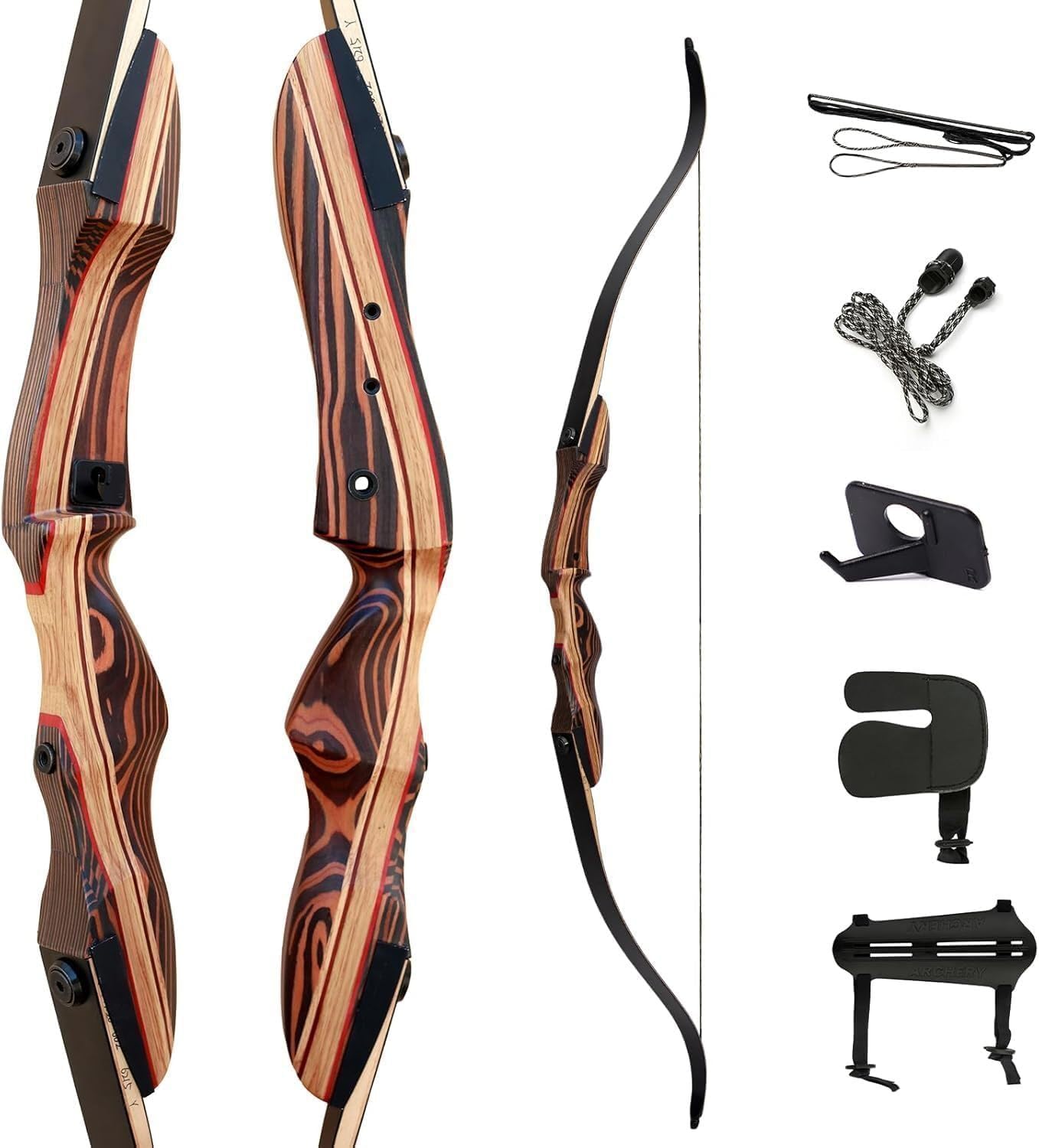
An excellent choice for first-time archers on a budget is the Deerseeker Raptor 62-inch Takedown.A lot of first bows are naked. None of the raptors do.To start, you get the whole set: a stringer tool, a finger tab, an arm protection, and an arrow rest. Take it out of the box and start shooting.Do the following using right-or left-handed risers and weights ranging from twenty to sixty pounds. Ease into it, then ramp it up.
Last but not least: threaded bushings that come pre-installed can accommodate a bowfishing reel, sight, stabilizer, or plunger.Downside: arrows are not provided. In contrast to the wooden bows up ahead, the riser appears plain. It is too lengthy for narrow blinds at 62 inches.Apt for: adult archers on a first-time outing or those shooting targets in the backyard. Avoid if you want arrows inside the box.
6: TOPARCHERY 56″ Takedown Hunting Recurve Bow, Metal Riser

When it comes to compact, rugged bows, archers that are tough on gear should get the TOPARCHERY 56-inch Takedown.A fall or a summer in a hot truck can cause cracks or warping in wooden risers. The metal avoids that.An aluminum alloy riser first, since it does not have any laminations that could split or deform.Following that, a short 56 inches in length makes it ideal for use in tight spaces like blinds, brush, or a little backyard.
Lastly, a compact, lightweight design weighing 700 grams with a maximum draw of 30 inches.Shorter bows tend to stack more tightly when drawn fully. There is an air of modernity about the metal riser. This variant is right-handed only.Applicable to: archers traversing tough terrain and bowhunters operating in dense cover. Those who prefer to work with real wood should not read this.
5: Obert Original Black Hunter 60″ Takedown Recurve Bow

For archers seeking a more authentically traditional experience, nothing beats the Obert Original Black Hunter.When held in the hand, many inexpensive recurves have a generic feel. Classical, instinctive shooting is the Black Hunter’s strong suit.The first is a set of limbs constructed from bamboo core using German laminate technology; these are strong, flexible, and exceptionally smooth.The next thing you’ll notice is the beautifully sculpted oak handle, which fits snugly into your hand.
Final item: seven draw weights, bowstring included, ranging from thirty to sixty pounds in five-pound increments.Cons: the box does not contain any rest, arrows, or stringer. Mounting of accessories is limited. If you want the real Obert, don’t settle for a knockoff.Ideal for: archers who prefer a more traditional style and spontaneous shooters. Those preparing a sight arrangement should not use this.
4: SAS Courage 60″ Hunting Takedown Recurve Bow

At sixty inches, the SAS Courage As a first-time hunter, you should go with the Takedown hardwood recurve.When the time comes to shoot, a hunting bow must remain stable. That is constructed on actual hardwood by the Courage.A riser made of dense, long-lasting, and esthetically pleasing Bintangor, Makore, and Chuglam hardwoods comes first.After that, for stability and speed, we have laminated maple and Makore limbs faced with high-strength fiberglass.
Finally, hunting weights at the very top of the weight scale, which ranges from 29 to 60 pounds, right or left-handed.The lack of an arrow or stringer tool in the package is a drawback. Metal risers are burdened by hardwood. Compared to the platforms ahead, there are fewer accessory possibilities.Suitability: conventional target shooters and first-season bowhunters. Not recommended for: newcomers looking for a full set.
3: Sanlida Eagle X9 Recurve Bow and Arrow Kit, 58″

The Sanlida Eagle X9, a top-notch shooter’s package that comes with arrows and a quiver.New archers often struggle with finding the right arrows for their draw weight. Eagle X9 automatically pairs all of your devices.At the outset, you’ll need a takedown bow, quiver, and six arrows that are proportional to your draw weight.Afterward, with a brace height of 8¼ to 9 inches, gradually raise the weights from 25 to 60 pounds in increments of 5 pounds.
Last but not least: a 16-strand Dacron string, laminated Bakelite tips, and limbs made of fiberglass and maple.The version is limited to right-handed users. This kit is designed for beginners. This bow is too short for long-draw archers at 58 inches.Apt for: novice bowhunters and adults just starting out. Not recommended for those who fire from a distance or are left-handed.
2: Samick Sage Takedown Recurve Bow 62″

As your needs change, the Samick Sage 62-inch Takedown will continue to be your go-to all-purpose recurve.Within a season, the majority of archers surpass their initial draw weight. Your sage will not insist that you purchase a new bow.First, there are separate, replaceable limbs made of fiberglass laminated with weights ranging from 25 to 60 pounds. Hold on to the riser and switch limbs when you gain strength.
The following are the plunger, stabilizer, sight, and quiver bushings that have already been installed: brass. Construct a full setup by beginning with a barebow.The wait is over! Introducing a right-or left-handed maple riser that is both lightweight and ergonomic, designed to combat hand fatigue.Downside: the standard rest is just a simple attachement. There is no stringer tool provided. Amenities can quickly pile up.Apt for: aspiring bowhunters, dedicated archery beginners, and those just starting out. People who desire arrows in the box shouldn’t buy this.
1: Southwest Archery Spyder Takedown Recurve Bow 62″ / 64″ XL

Because it is versatile and can accommodate the needs of almost any archer, the Southwest Archery Spyder is the greatest recurve bow on the market.Long pulls on conventional recurves quickly pile up, which is an issue that most bows overlook for tall archers. The Spyder takes care of that.To start, the riser is available in two sizes: normal (62 inches) and XL (64 inches), offering longer limbs for longer draws. More refined when drawn fully.Second, a lightweight, compact, and precisely constructed riser made from four woods obtained from nature.
Finally, the limbs are prepared for Fast Flight or Flemish twist strings with reinforced maple-core tips.As for the fourth point, the package contains the riser, the limbs, the 14-strand Dacron string, the rest, and the stringer tool. There are 20–60 pound draw weights, or 25–55 pounds for the XL.Downside: the packaging lacks arrows. With a decreased draw weight, the XL reaches its maximum. Sizes that are popular tend to sell out fast.This bow is ideal for long-draw shooters and tall archers. This is not for you if you require directional arrows.
Things to Consider Before Buying a Recurve Bow:
Choosing the right recurve bow requires careful thought and understanding. Factors like draw weight, size, and materials significantly affect performance and comfort. As you prepare to make this investment, asking specific questions about your experience and intended use will help ensure you select a bow that enhances your archery skills.
Traditional and Takedown Bows
Traditional bows emphasize craftsmanship and the authentic archery experience. Made with wood and sometimes glass or carbon for reinforcement, these models can appeal to purists seeking a nostalgic connection. Takedown bows increase versatility by allowing users to separate the limbs from the riser for easier transport and storage. This feature is particularly useful if you frequently travel to archery ranges or events, enabling quick adjustments or repairs without needing specialized tools.
Olympic-style Recurve Bows
Precision is the hallmark of Olympic-style recurve bows, built for competitive shooting. Featuring advanced materials like aluminum and carbon fiber, these bows include components such as stabilizers and sights that enhance accuracy. While they require a greater investment, the performance benefits can be significant for serious archers. Many competitors opt for these models, as they conform to stringent regulations set by organizations like World Archery, ensuring they are well-suited for competitive events.
Draw weight and bow length
Assessing draw weight is essential for usability and comfort. A beginner might opt for a lower draw weight, such as 25 to 30 pounds, to develop proper form, while experienced archers may prefer 40 pounds or more for competitive shooting. Bow length also matters; shorter bows are typically more maneuverable, making them suitable for hunting, while longer bows provide better stability and accuracy for target shooting. Always try before buying to ensure optimal fit and performance.
Handedness, materials, and budget
Identifying your dominant hand is a key factor when selecting a bow. Right-handed shooters should look for right-hand bows, while left-handed archers need left-hand options. Materials used in bow construction, such as wood, aluminum, or fiberglass, directly impact durability and price. Budget considerations can influence your choices; mid-range bows often offer a balance of performance and quality. Prioritizing these elements ensures a purchase that aligns with your needs and archery goals.
Match a bow to your skill level
Selecting a recurve bow that aligns with your skill level is paramount. Beginner archers may benefit from lighter draw weights and simpler setups, making it easier to develop basic shooting techniques. Intermediate users can explore bows with adjustable features for fine-tuning as skills progress. Experienced archers might seek higher draw weights and advanced designs that enhance performance. Tailoring your choice based on expertise prevents frustration and encourages consistent improvement over time.
Check fit, comfort, and included accessories
Ensuring the bow fits comfortably is essential for a positive archery experience. Grip style should match your hand size, while the bow’s overall weight should feel manageable during use. Take note of included accessories like stabilizers, arrow rests, and sight systems, as these can significantly influence your shooting experience. A well-equipped bow not only enhances performance but also reduces additional expenses down the line, streamlining your entry into the sport.
Compare options and confirm specifications
Identifying the right recurve bow involves comparing various options, focusing on specifications like draw weight, length, and material. Assess the available brands and models, ensuring they align with your skill level and intended use, whether for target practice or hunting. Reading customer reviews can provide insight into real-world performance and reliability. Additionally, verify that each bow meets your specific height and strength requirements, which can significantly enhance your experience and accuracy in shooting.
Assemble and inspect the bow safely
Assembling the bow requires careful attention to detail to ensure safety and functionality. Start by following the manufacturer’s instructions, which typically outline each step clearly. Attach the limbs to the riser without forcing any connections and ensure that all screws are tightened appropriately. After assembly, inspect the bow for defects or irregularities, checking limbs, strings, and accessories. This inspection can prevent accidents and enhance shooting accuracy, providing a more enjoyable archery experience.
Key advantages
Lightweight designs enhance maneuverability, making recurve bows suitable for both target shooting and hunting. Their simplicity often results in reduced costs for beginners, as fewer accessories are typically needed compared to compound bows. String replacement and maintenance are straightforward tasks, appealing to those who prefer a low-maintenance setup. Additionally, a recurve bow’s classic aesthetic can be alluring, evoking a strong sense of tradition and craftsmanship.
Limitations to consider
Learning to shoot a recurve bow proficiently demands significant practice and patience, often resulting in initial frustration for many novices. Tracking down the right draw weight can complicate the buying process, as too heavy a bow may hinder progress. Maintenance after every outing, including checking the limbs and strings for wear, is another consideration. An investment in quality string and bow case may also be essential, adding to upfront costs.
Essential Checks
Confirming specific details before completing your purchase is essential for ensuring satisfaction with your recurve bow. Examine the bow’s draw weight and length to match your strength and size for optimal performance. Verify the materials used in the bow’s construction, as different components can affect durability and weight. Check the warranty policy and customer service options from the manufacturer to protect your investment. Last, consider how the bow feels in your hand by testing grip comfort and overall balance.
Conclusion
Buying a recurve bow requires careful consideration of various factors. Prioritize your draw weight and length, as these should match your physical capabilities for optimal performance. Try to assess the type of shooting you’ll pursue, whether it’s target practice or hunting, which will influence your choice significantly. Familiarizing yourself with available materials and brands can also enhance your decision-making process. Making an informed choice will ensure your investment brings satisfaction for years to come.
Leave a Reply