
Best Rifle Scopes can make the difference between a missed shot and dead-on accuracy, and finding the right optics is frustrating. Our range-tested reviews and clear comparisons cut through hype to save you time and money, boosting long-range confidence and faster target acquisition. This guide reveals top-rated tactical and hunting scopes that deliver crisp, reliable performance-game-changing clarity that builds fierce confidence. Read on to find the perfect match for your rifle.
Contents
- Top 7 Rifle Scopes:
- 7: CVLIFE 3-9×40 Optics R4 Riflescope with Scope Mounts
- 6: Bushnell Banner 3-9×40 Dusk & Dawn Riflescope
- 5: SIG SAUER Buckmasters 3-12x44mm Riflescope
- 4: Vortex Optics Crossfire II 3-9×40 Riflescope
- 3: Vortex Diamondback 4-12×40 Riflescope
- 2: Athlon Optics Argos BTR GEN2 6-24×50 FFP Riflescope
- 1: Leupold VX-Freedom 3-9x40mm Riflescope
- Things to Consider Before Buying a Rifle Scope:
- Fixed vs. Variable Magnification
- First vs. Second Focal Plane Systems
- Glass Quality and Lens Coatings
- Objective Lens Diameter and Light Transmission
- Main Tube Construction and Durability
- Turret Precision and Parallax Adjustment
- Traditional Duplex and BDC Reticles
- Tactical Mil-Dot and Illuminated Options
- Identifying Your Specific Shooting Discipline
- Matching the Scope to Your Rifle and Budget
- Routine Care for Long-Term Performance
- To wrap up
Top 7 Rifle Scopes:
7: CVLIFE 3-9×40 Optics R4 Riflescope with Scope Mounts
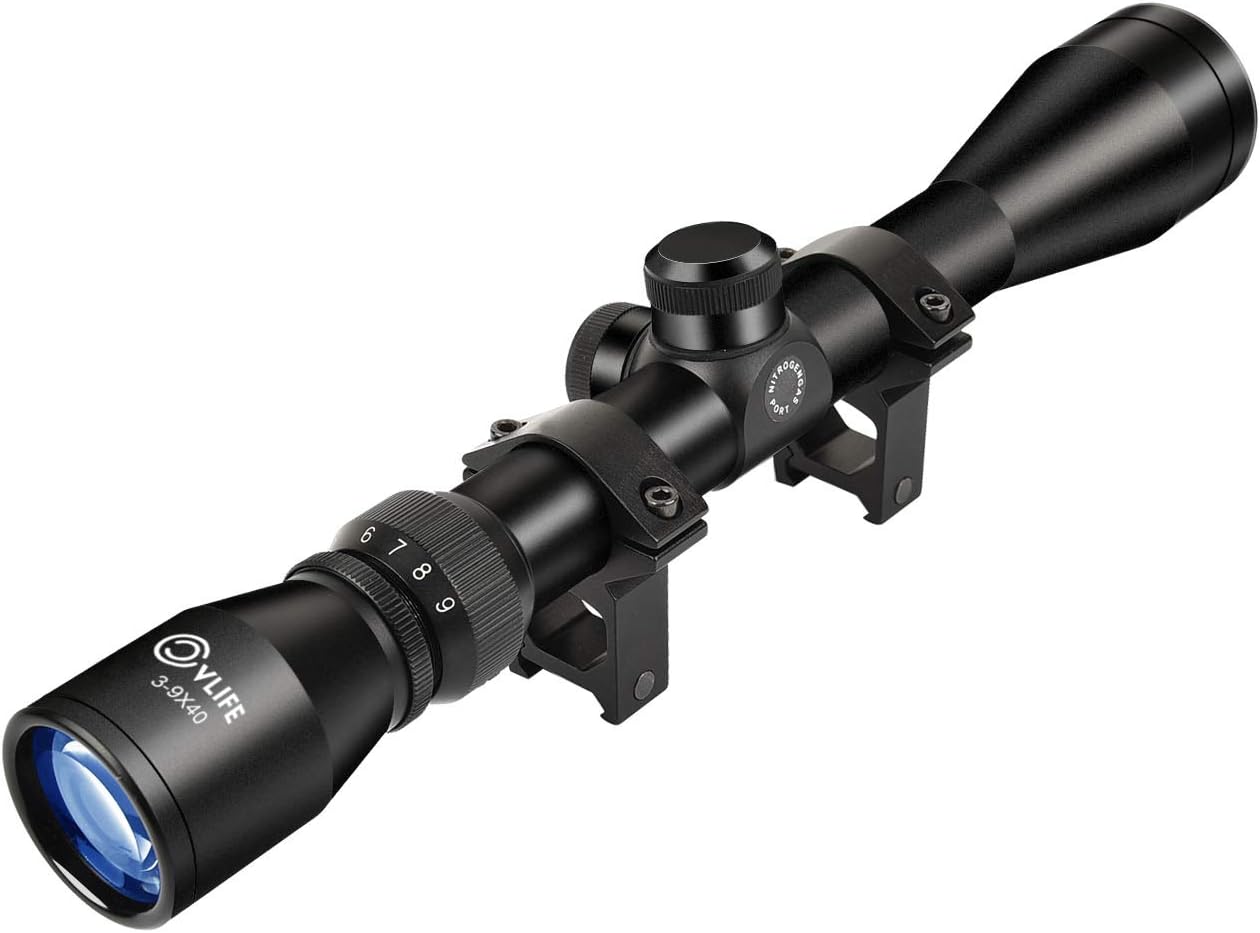
An excellent low-cost option for a beginner’s rifle is the CVLIFE 3-9×40 R4.You recently purchased the firearm. Nothing is left for glass as the season opens in three weeks.As a first step, most hunters merely utilize a 3-9x zoom range with a 40mm objective, which is the traditional setup for deer hunting.Following that, we get the R4 crosshair reticle, which uses broad outside posts to draw the eye to the center of dark wood.
A 12-ounce aluminum tube with scope rings is the last item. Go ahead and hunt it after mounting it.Downside: there is no light. On longer shots, the shift is caused by fixed parallax. Fully magnified, the image becomes less sharp.Ideal for: those who are new to rifles, builds that minimize recoil, and those who need a backup gun. Avoid using magnums or rounds that go over 200 yards.
6: Bushnell Banner 3-9×40 Dusk & Dawn Riflescope

When time is of the essence, nothing beats the Bushnell Banner Dusk & Dawn.During the nite, deer move about. At that same moment, the majority of plain glass becomes gray.Dusk & Dawn Brightness multi-coated lenses are designed to capture detail in low-light conditions, which is ideal for hunting whitetail deer.What follows is six inches of space for the eyes. A hard-recoiling rifle will never hit your eyebrow if you mount it forward.
At long last, it’s argon-purged and IPX7 waterproof, so it won’t get wet when your chilly rifle hits your warm truck.Dark reticle is a drawback. Clicks on the tower feel squishy. Outdated layout; no choices for a modern reticle.Hunting at dawn and dusk, as well as shooting slugs and magnums, are the best times to stand. Caveat: turret-dialing hunters should not play.
5: SIG SAUER Buckmasters 3-12x44mm Riflescope

For hunters who prefer holdover marks over guesswork, the SIG SAUER Buckmasters 3-12×44 are the ideal choice.At 300 yards, a basic crosshair will not reveal anything about a deer.To begin, marking holdover dots out to 500 yards is a breeze using the Buckmasters BDC reticle. Select the dot, squeeze, and range the animal.The following is a 3-12x magnification range, which is actually a 4x zoom range on low-dispersion glass that maintains sharpness at the highest end.
Lastly, there’s an incorporated threaded throw lever that allows you to swing three to twelve times while wearing gloves.Negative: there is no illumination of the reticle. We need rings that are higher for the 44mm objective. At the range, verify your drop.The.308 and 6.5 Creedmoor rifles are ideal for hunters who take accurate shots from a distance. Inappropriate for: anyone who would harvest wood for fuel.
4: Vortex Optics Crossfire II 3-9×40 Riflescope

The greatest tried-and-true all-around performer among these is the Vortex Crossfire II 3-9×40.A deer comes out. Locate him in the window during the next two seconds.The first is a long-eye-relief, extremely forgiving eye box; just lower your cheek and the image appears.The Dead-Hold BDC reticle follows, which features holdover and windage references that remain clutter-free across all power settings.
Lastly: a nitrogen-purged, one-piece aircraft-grade aluminum tube with an o-ring seal. It weighs about 16 ounces and is shockproof, waterproof, and fogproof.Negative: Instead of dialing, you have to hold over capped turrets. Lack of light. In open country, 9x runs out.Who it’s for: whitetail hunters, first-time buyers of substantial upgrades, and anyone looking for a reliable scope. Avoid using long-range dialers.
3: Vortex Diamondback 4-12×40 Riflescope

The ideal choice for western and open-country hunters is the Vortex Diamondback 4-12×40.Four hundred yards is a typical shot in open terrain. There isn’t enough strength in nine to read the animal’s body language.To start, it has 4-12x magnification, which is more than most hunting scopes offer, allowing you to see your target more clearly.Up next: zero-reset metal-on-metal turrets—sight in, reset the dial, adjust the elevation for distance, and then precisely return home.
At last, there’s the interior assembly that ensures every click tracks true: a precision glide erector mechanism.Disadvantage: Fully magnified, the 40mm objective reduces light. Reticle not lighted. Greater in length and mass than a 3-9x.Ideal for: open-field whitetail hunters, westerners, and distance shooters. Not recommended for: hunters who meticulously weigh each log.
2: Athlon Optics Argos BTR GEN2 6-24×50 FFP Riflescope
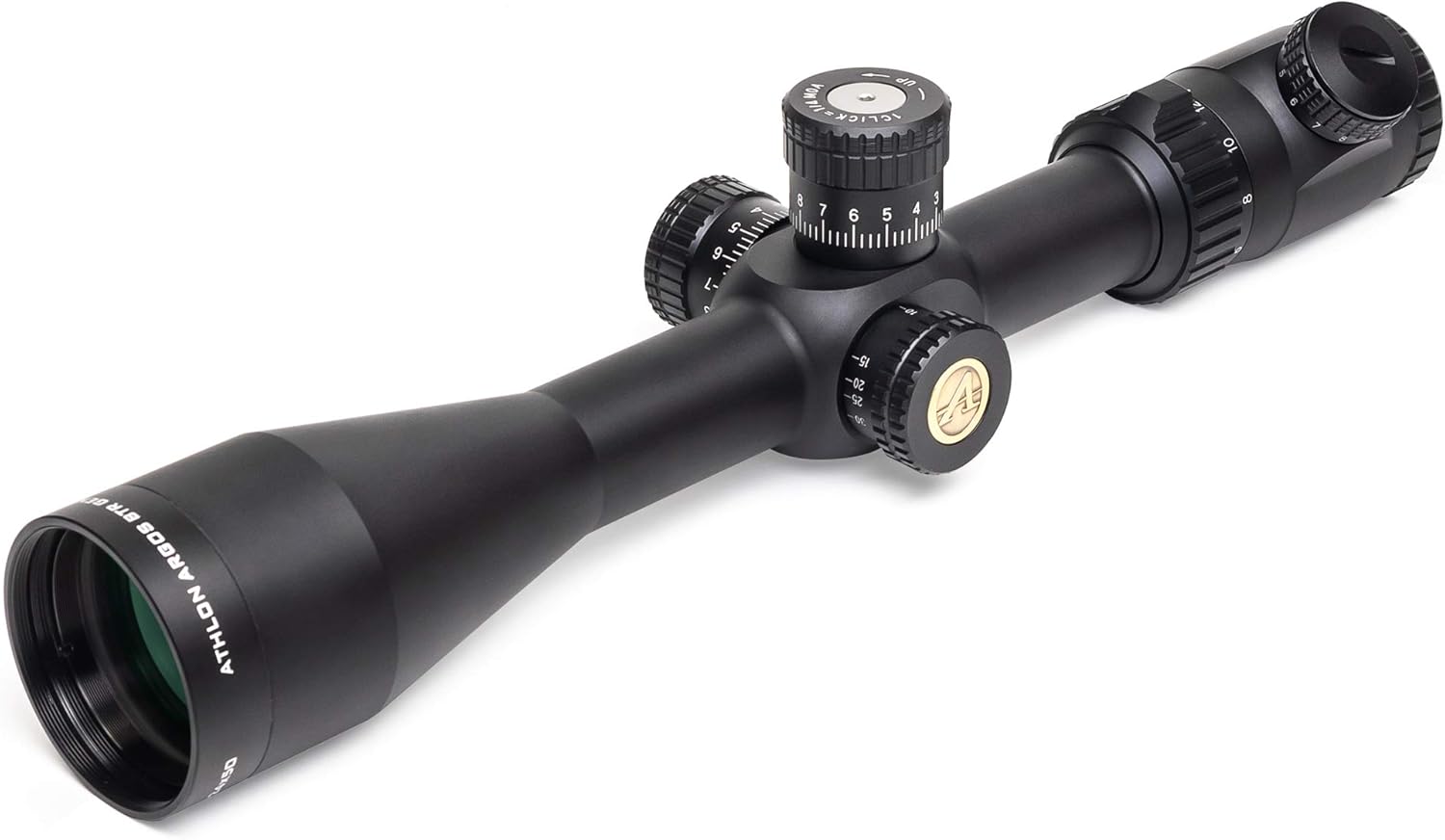
The ideal choice for hunters who also shoot at long range is the Athlon Argos BTR GEN2 6-24×50.So far, every scope has had the same problem. There is just one magnification level at which your holdover marks are accurate.A first focal plane reticle should be the first thing to be considered. The marks enlarge or contract in proportion to the objective, thus an 8x hold is the same as a 24x hold. Just just one thing accomplishes that.
After that, there’s an illuminated APLR2 MOA reticle that has been carved into the glass. It’s legible even against a dark treeline.Lastly, a 50mm objective with 6-24x magnification and a sunshade to reduce flare and mirage on sunny days.Downside: Here we have the heaviest optic. If you’re working with close quarters, six power is too much. It takes time to become illuminated.Who it’s best suited for: hunters in the prairie and in the mountains. Not recommended for: light backcountry builders or bush hunters.
1: Leupold VX-Freedom 3-9x40mm Riflescope

The Leupold VX-Freedom 3-9×40 is the best rifle sight in 2026; it’s the kind of scope you buy once and never have to replace.All of the optics here provide a little. Whether it’s weight, durability, or glass, something always gives.Firstly: everything was made in the USA, from design to assembly. Everything else in this scope is manufactured abroad. Everything for this one is created in-house.The second is Leupold’s Advanced Optical System, which reduces glare and optimizes light transmission for lengthy glassing in low-light conditions.
And finally, 12.2 ounces. When you’re carrying a rifle all day, every weight matters, and this is the lightest scope we have.Lastly, we have a Hunt-Plex reticle that features capped finger-click turrets. Once you’ve set your zero and capped it, it will withstand recoil and truck beds with ease.One drawback is that open-country hunters prefer to start with 3-9x. Reticle not lighted. Turrets with caps aren’t designed for dialing.Ideal for: price-conscious hunters, those who want to get the most out of their scope, and serious elk and deer hunters. No dialers here.
Things to Consider Before Buying a Rifle Scope:
There’s a wide array of rifle scopes available, and choosing the right one can significantly affect your shooting experience. Understanding the key factors that influence performance and usability ensures informed decisions, enhancing accuracy and overall enjoyment in the field.
Fixed vs. Variable Magnification
Fixed magnification scopes maintain a consistent power level, offering simplicity and clarity. Variable magnification scopes, on the other hand, allow for adjustment across a range of magnifications, providing adaptability for different scenarios. Selecting between these options often depends on your shooting style and intended use.
First vs. Second Focal Plane Systems
First focal plane (FFP) systems keep reticle size in proportion to the target at any magnification, ensuring consistent measurements. Second focal plane (SFP) systems maintain a constant reticle size, which can cause discrepancies at different magnifications. These distinctions can affect range estimation and overall shooting accuracy, necessitating a thoughtful evaluation prior to purchase. First and second focal plane configurations come with unique advantages. In FFP scopes, reticles become more visible as magnification increases, making them beneficial for precision shooting. Conversely, SFP scopes can offer clearer images at low magnification levels, which may appeal to hunters needing quick target acquisition. Understanding the appropriate application of each system ensures optimal performance for your specific shooting needs.
Glass Quality and Lens Coatings
High-quality glass significantly impacts light transmission and clarity. Multi-coated lenses enhance light capture, reducing glare and improving visibility in low-light conditions. Serious shooters often prioritize these features for optimal performance.
Objective Lens Diameter and Light Transmission
Objective lens diameter plays a critical role in light gathering capability. Generally, larger diameters allow more light to enter, enhancing brightness and clarity. This aspect becomes particularly significant in low-light environments.
In practical terms, scopes with a larger objective lens (typically 50mm or more) can provide a brighter image in dusk or dawn situations. A larger lens also tends to minimize the impact of light conditions on your sight picture, allowing for clearer views of distant targets. Considerations such as the mounting height and type of shooting you engage in may influence your choice in diameter.
Main Tube Construction and Durability
Tube construction affects both durability and performance. Opting for a scope with a solid, high-quality main tube ensures resistance against recoil and impact. Aluminum alloys are commonly used for their balance of weight and strength, contributing to overall functionality.
Turret Precision and Parallax Adjustment
Turrets significantly impact the accuracy of adjustments. Smooth, tactile clicks ensure precise elevation and windage settings, while adequate parallax adjustment contributes to target clarity at varying distances.
A focus on turret precision can enhance your shooting experience. Quality turrets should provide audible clicks for each adjustment, allowing easier tracking of changes. Parallax adjustment not only fine-tunes your sight picture but also accommodates different shooting distances, improving overall accuracy. Reliable mechanisms offer effortless adjustments without the risk of getting out of alignment during use.
Traditional Duplex and BDC Reticles
Traditional duplex reticles feature thick crosshairs that taper to finer points, offering quick targeting for various shooting scenarios. Bullet Drop Compensator (BDC) reticles, on the other hand, aid in long-range shooting by providing holdover points for drop adjustments, improving accuracy without needing elaborate calculations.
Tactical Mil-Dot and Illuminated Options
Tactical mil-dot reticles enhance shooting precision by incorporating dots spaced for elevation and windage compensations. Illuminated options improve visibility in low-light conditions, allowing for effective targeting even at dusk or dawn when natural light may be insufficient.
Illuminated tactical reticles gain favor among many shooters, particularly in dynamic environments such as tactical training or hunting at twilight. With adjustable brightness settings, these scopes can adapt to varying light conditions, ensuring that the reticle remains visible against diverse backgrounds. This adaptability enhances shooting confidence, especially in fast-paced situations where quick target acquisition is critical. Choosing a model that features both illuminated and mil-dot layouts can successfully combine speed and precision, making it suitable for a wide range of applications, from sport shooting to serious tactical engagements.
Identifying Your Specific Shooting Discipline
Different shooting disciplines require different features in a scope. Understanding whether you are using the rifle for hunting, competitive shooting, or tactical purposes can significantly influence your choice. For instance, hunting scopes often need a wider field of view compared to tactical scopes that focus on precision and distance.
Matching the Scope to Your Rifle and Budget
Selecting a scope should reflect both your rifle’s specifications and your financial constraints. High-quality optics can be found across various price ranges, but overlooking compatibility with your rifle can lead to suboptimal performance. Investing in a well-suited scope enhances both accuracy and user experience.
Compatibility remains a key consideration when matching your scope to your rifle. For instance, a lightweight rifle may benefit from a compact scope to maintain balance, while heavier rifles might accommodate larger optics. In terms of budget, setting a range can help narrow down options, as premium brands provide different features compared to more affordable models. Evaluate what aspects of the scope are most beneficial for your intended use, whether that’s durability for rough terrain or advanced optics for long-distance shooting.
Routine Care for Long-Term Performance
Regular maintenance prevents issues and prolongs lifespan. Inspect for scratches and clean the exterior, focusing on the lens and body, to remove dust and fingerprints.
Using a dedicated lens cleaning solution and proper wipes is imperative for removing stubborn marks. Store your rifle scope in a climate-controlled environment, away from extreme temperatures or humidity to minimize internal fogging. Regular care ensures that your equipment performs at its best for many seasons, reinforcing reliability during crucial moments in the field.
To wrap up
Considering factors such as magnification, reticle style, and durability will significantly enhance your rifle scope selection. Assessing your specific needs, whether for hunting or target shooting, will guide you toward the most effective option. A well-selected scope can greatly improve both accuracy and enjoyment in your shooting experience, leading to better performance in the field.
Leave a Reply